
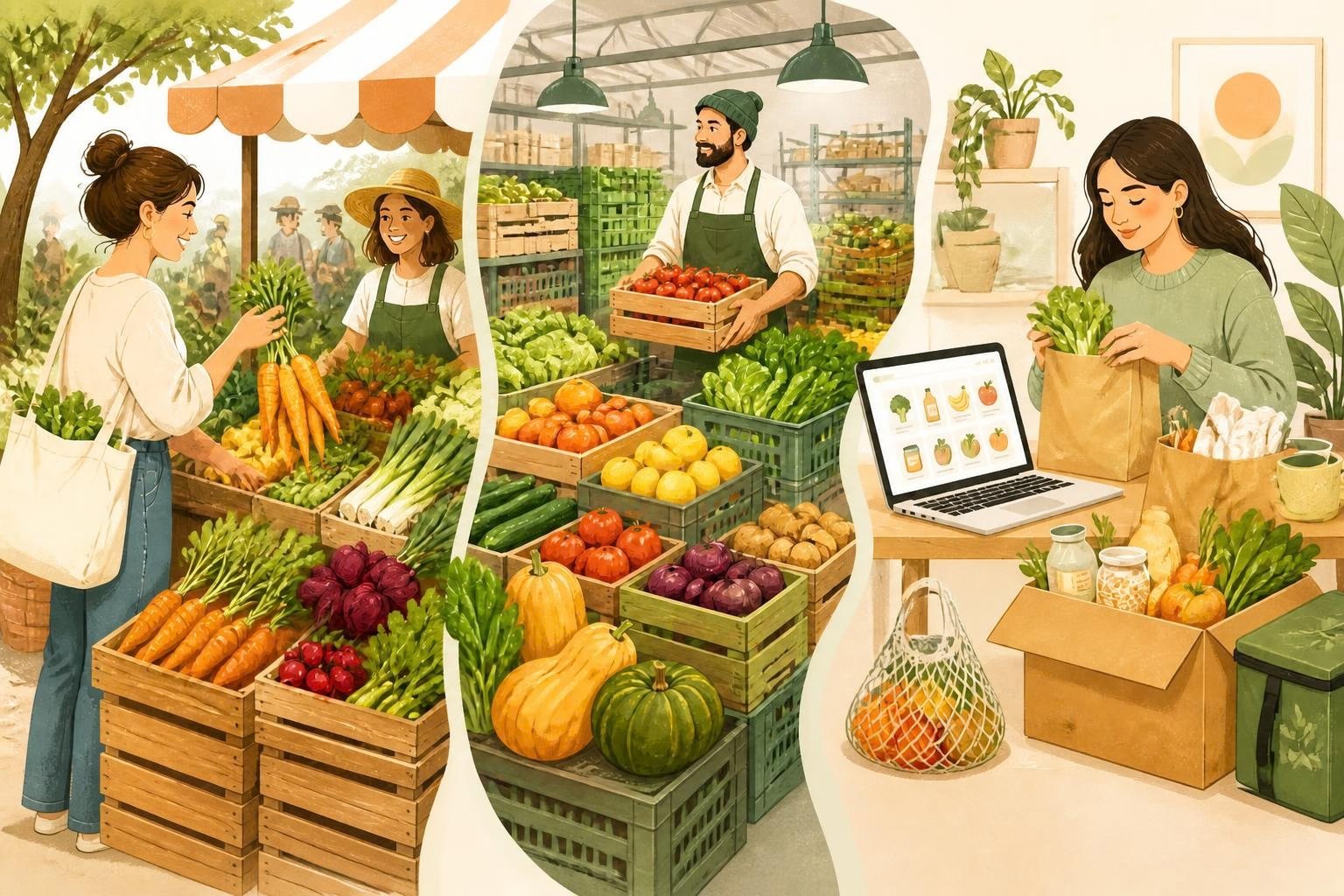
Sustainable grocery shopping and neighborhood stores: where this started
The idea came from an article in Zonalocale, a local news site covering the Vasto area in Abruzzo. Its argument is simple: sustainable grocery shopping today shows up in small, repeated habits, like bringing your own bag, buying loose goods, skipping unnecessary packaging, and going back to the same trusted shop. The piece also urges shopkeepers to speak plainly, choosing “reusable” over a vague “eco-friendly,” and to name the material instead of waving green labels around.
How many neighborhood stores have closed in Italy
Before talking about habits, the context deserves a look. According to the Città e demografia d’impresa analysis by the Confcommercio research office, presented in March 2026, Italian cities lost 156,000 stores and street vendors between 2012 and 2025, more than a quarter of the total. In historic centers, food shops fell by 17.6%, street trading by 29.7%, and newsstands by a staggering 51.9%.
Over the same period, e-commerce grew from 31 to more than 62 billion euros, while restaurants and short-term rentals took over the empty storefronts. Confcommercio warns of bedroom neighborhoods, which are harder on older people and on anyone who relies on services close to home. The corner shop, in short, is no longer a given and has to be chosen on purpose, a bit like sorting your waste even when door-to-door collection acts up.
Campagna Amica farmers’ markets by the numbers
While traditional stores retreat, farmers’ markets keep growing. In November 2025, the farmers’ association Coldiretti and the Campagna Amica Foundation counted 1,200 farmers’ markets in Italian city centers, involving 15,000 farms and more than 15 million shoppers a year. According to a Noto Sondaggi survey, 86% of Italians would like one near home, rising to 93% in central regions. The network describes itself as the fourth-largest food distribution channel in the country.
In Turin, the new covered market has moved into the former Cinema del Corso, an Art Nouveau building gutted by fire in 1980. It shows how direct sales can also bring abandoned spaces back to life, the exact opposite of the decline described above.
Why I shop at Campagna Amica
I often buy from Campagna Amica, and the reason is easy to explain: local producers, fresh food, a short supply chain. At the stall you know who grew what, you buy what the season offers, and the trip from field to bag gets a lot shorter. Everything else, from fewer middlemen to almost no packaging, follows naturally.
I’m not alone. A Campagna Amica survey reported by Il Sole 24 Ore listed vegetables (68%) and fruit (58%) as the most frequent purchases at farmers’ markets, followed by cheese (44%), with the average receipt rising from 27 euros in 2017 to 32 in 2020. Those are everyday grocery figures, far from the idea of the farmers’ market as a niche indulgence.
Milan’s Ortomercato on Saturday morning: how it works for the public
My partner has a different philosophy. On Saturday mornings he prefers Milan’s Ortomercato on Via Lombroso, where you buy in bulk, but the quality is outstanding and the savings are guaranteed. It is Italy’s largest wholesale fruit and vegetable market, run by SogeMi as part of the Foody project, with a new 47,000-square-meter hall opened in May 2024.
According to MilanoFree’s updated guide, members of the public without a trade card can enter the produce section on Saturdays from 9 a.m. to 12:30 p.m., ideally by 9:30 or 10, because stalls start packing up around noon. Sizes stay professional, crates and flats, and prices run 30 to 50% lower than at supermarkets and neighborhood markets.
Short supply chain or bulk buying: pros and cons
Side by side, the two strategies meet different needs. The farmers’ market rewards proximity and relationships: you buy little and often, you know the grower, and you avoid waste because you only bring home what you need. The wholesale market rewards your wallet and your options: the variety is huge, prices drop, but a crate of tomatoes calls for a plan, whether that’s a batch of sauce, dinner with friends, or splitting it with the neighbors.
The risk of buying in bulk is waste, which would cancel out any environmental gain. The risk of the farmers’ market is cost, for anyone trying to make ends meet at the end of the month. Neither formula is perfect, and maybe that’s the whole point: sustainability at home looks like a mosaic of choices, to be rearranged as you go.
Online grocery shopping from Italian supermarkets: the numbers
Then there’s a third way, one that skips stalls and aisles altogether: supermarket e-commerce. According to the Netcomm and Politecnico di Milano B2C eCommerce Observatory, Italy’s online Food & Grocery segment is worth 5.1 billion euros in 2026, up 5%. Supermarket groceries account for 35% of that figure, while the largest slice, 47%, goes to food delivery. For comparison, product e-commerce as a whole reaches 42.6 billion and covers 11.5% of consumer spending.
The digital share of food is still modest. In an analysis with NIQ presented in June 2025, the Netcomm Consortium put online at 6.5% of food sales, about half the average for other goods. In December 2024, online prices were also about 5% higher on average than in physical stores, mostly because of logistics costs. People order out of habit (35%), for the product range (29.6%), and for delivery quality (29.4%); more than seven orders in ten are repeat purchases, 82% are delivered to the door, and the typical shopper is between 25 and 44 and lives in a large city.
On the environmental side, the jury is still out: in theory, one van serving a neighborhood replaces quite a few car trips, but bags, plastic trays, and fragmented deliveries eat into that advantage. A lot depends on how much people order and how often.
The UX of online grocery shopping: substitutions, time slots, and complaints
This is where my own line of work comes in. I’ll admit that the digital grocery experience isn’t always the most relaxing, quite the opposite: sometimes it makes me want to close the app, grab my bag, and go do the shopping myself. And it isn’t just my impression.
The Baymard Institute, which researches e-commerce usability, published an update to its online grocery research in April 2026: 70 user testing sessions on eight US sites, including ALDI, Kroger, and Target, and more than 670 new medium- to high-severity usability issues, for a total of over 1,200. The examples will sound familiar to Italian shoppers too: on one site, the cart doesn’t show delivery windows, and only later do you discover that none are available; on another, substitutions can only be set at checkout, choosing from just two suggested alternatives.
Substitutions are the sorest spot of all. In an earlier study on the topic, Baymard found that 76% of participants had some difficulty setting them, and some needed more than ten minutes to define them item by item, ending up abandoning the order. One user summed it up: “I don’t need to make 17 hypothetical grocery decisions.” In practice, you end up shopping twice, once for real and once as a backup plan.
Then there’s delivery. On the complaints board of the Italian consumer association Altroconsumo, a customer wrote in December 2025 about ordering 197.29 euros’ worth of groceries through the Esselunga app and finding several items missing on arrival. After reporting the problem right away, the customer was told by customer service that the products had been “correctly picked from the warehouse and delivered”. It’s a single case, of course, but it captures the limits of a relationship that runs through a screen: at the farmer’s stall, a misunderstanding gets cleared up face to face, while online it’s the system’s word against the customer’s. No wonder some retailers are rethinking the physical store as a place for experiences, as Unieuro did with its new format.
Restraint and savings: what the Coop 2025 Report says
The national picture confirms this tension between values and budgets. The Coop 2025 Report, produced with Nomisma and NielsenIQ and summarized by Il Fatto Alimentare, lists protecting the environment among the priorities of 54% of Italians, despite the so-called greenlash, while saving money drives purchases for 42% of respondents.
In large-scale retail, in the first half of 2025, fruit sales grew by 4.3% and vegetables by 5.8%, while ultra-processed products fell 3.3% in volume. The report talks about “deconsumerism”: people buy less, repair more, and choose secondhand. The same mindset shows up in packaging, from paper bottles to coffee pods reclassified as packaging.
How to spot a truly sustainable neighborhood store
Going back to the original article, a few practical criteria help tell real commitment from green window dressing:
- it sells loose products or accepts containers brought from home, where the rules allow it;
- it states origin and materials precisely, without generic adjectives;
- it offers a reusable bag at the right moment, without pushing it;
- it highlights seasonal produce and local suppliers;
- it explains its choices with clear signs or a quick word at the register.
When it works, the store around the corner becomes an anchor of trust for the neighborhood, as the Confcommercio data shows. And for anyone living with a touch of eco-anxiety about the climate crisis, shopping thoughtfully remains one of the few concrete things everyone can do, every week.
Related sources
- Spesa sostenibile e negozi di vicinato: come la sensibilità ecologica cambia le abitudini dei consumatori, Zonalocale, August 29, 2026
- Desertificazione commerciale, in 13 anni sparite 156mila attività, Confcommercio, March 2026
- Made in Italy: Coldiretti Campagna Amica, 1200 mercati contadini nelle città, 86% italiani ne vorrebbe uno vicino, Il Punto Coldiretti, November 20, 2025
- Nei mercati Coldiretti coinvolte 12mila aziende, giro d’affari da 3,5 miliardi, Il Sole 24 Ore
- Ortomercato Milano (Foody): orari al pubblico, accesso privati sabato, prezzi e come arrivare, MilanoFree, May 2026
- Rapporto Coop 2025: consumi e stili di vita degli italiani di oggi e di domani, Coop, Nomisma, NielsenIQ
- Rapporto Coop 2025: è finita l’era del consumismo sfrenato?, Il Fatto Alimentare, September 10, 2025
- L’eCommerce B2c di prodotto in Italia nel 2026 raggiunge i 42,6 miliardi di euro, Osservatori Digital Innovation, Politecnico di Milano, May 19, 2026
- Il Mercato eCommerce Food & Grocery cresce dell’8,5% e consolida il suo ruolo nel Retail Italiano, Consorzio Netcomm, June 25, 2025
- Online Grocery Ecommerce UX 2026: Expanded & Updated Research Findings, Baymard Institute, April 22, 2026
- Online Grocery UX: 3 Ways to Make Setting Grocery Substitution Preferences Easier, Baymard Institute, January 18, 2022
- Mancanza dei prodotti alla consegna, Altroconsumo complaints board, December 7, 2025
- Campagna Amica, official website of the foundation
