
Paper bottles made of cellulose fiber: the Perlen and Pulpex deal
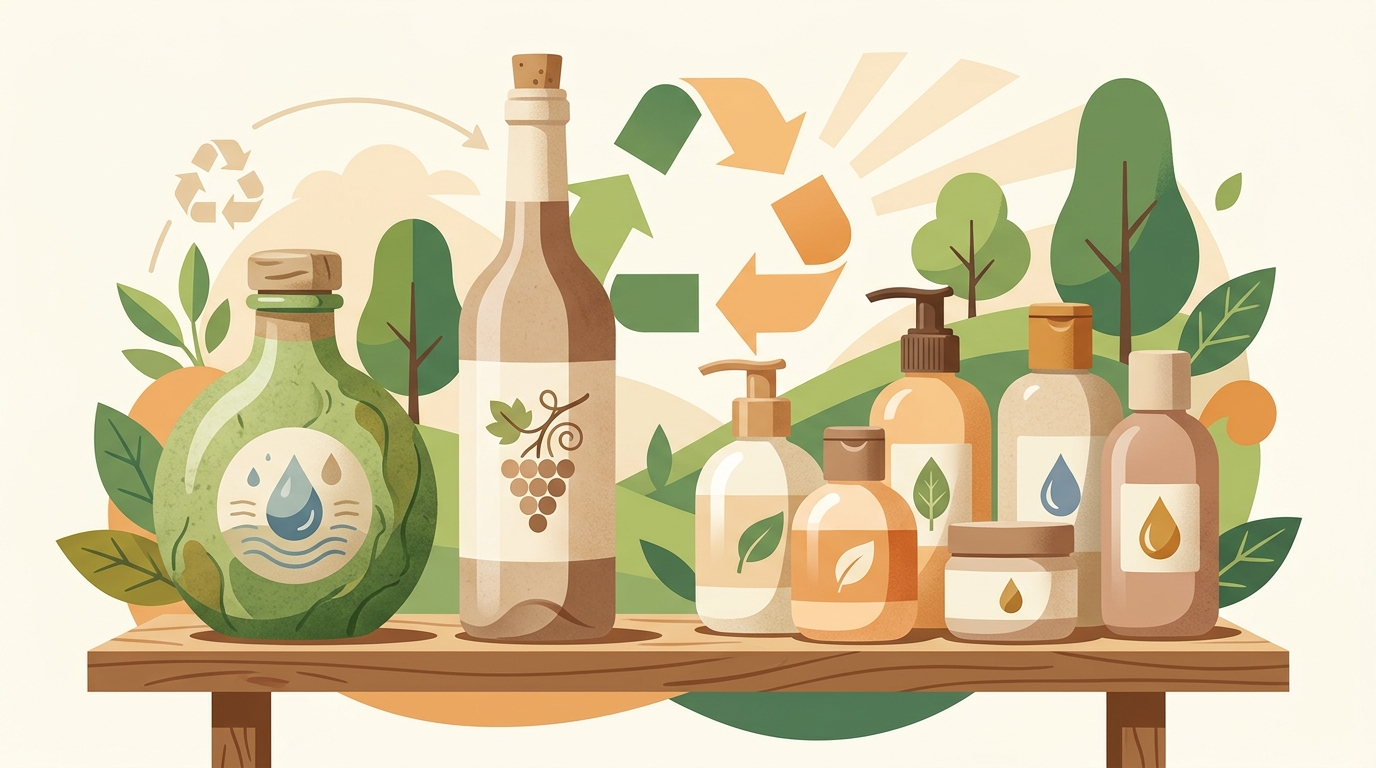
Paper bottles for water, wine and cosmetics are one step away from Italian store shelves. Corriere della Sera reported on September 22 that Perlen Papier, a Swiss paper mill with more than 150 years behind it, has secured an exclusive license from Pulpex, a British sustainable packaging company. Perlen will produce Pulpex’s molded fiber containers for Switzerland, Austria, southern Germany and Italy.
The agreement dates back to March 2026, and according to Perlen’s press release, production could start in 2027. Florian Geiger, CEO of Perlen Papier and Perlen Industrieholding, talks about a future plant in Switzerland that will create a short supply chain, designed above all for Italian customers.
How a paper bottle is made without plastic
The body of the container comes out as a single piece. Cellulose pulp is wet-molded in a mold patented by Pulpex and then left to dry. No adhesives are involved, and the fibers come from sustainably managed forests or recycled paper. Inside, a thin plastic-free barrier layer shields the contents from moisture and oxygen.
There are three standard sizes: 300, 500 and 750 milliliters. Brands, however, can order custom shapes. As for what goes inside, the list is long: water, still drinks, milk, wine, oil and even cosmetics.
Where the 90% CO2 reduction compared with glass comes from
The figure comes from a cradle-to-gate assessment. It measures emissions from the extraction of raw materials up to the moment the container leaves the factory. With this method, the carbon footprint turns out roughly 90% lower than glass and 30% lower than PET.
At end of life, the bottles have passed the 4evergreen test by Cepi, the Confederation of European Paper Industries. The protocol simulates in a lab what happens in recycling plants, so the container can go into paper and cardboard collection.
The number deserves a careful reading. The cradle-to-gate boundary leaves out distribution, use and disposal. For heavy, bulky glass, transport is one of the costliest items, so in that respect the calculation does not inflate fiber’s advantage. The official release, though, says “up to 90%”: a ceiling, which hints at a range of results depending on the case.
Frugalpac as a precedent for wine in paper bottles
In wine, paper already has a pioneer. The Frugal Bottle by British company Frugalpac is made of 94% recycled paperboard with a food-grade plastic pouch inside. It weighs 83 grams, about a fifth of a classic 750 ml glass bottle. In 2020 an independent analysis by Intertek credited it with a footprint 84% lower than new glass and a third lower than recycled glass. Its first customer was Italian: Cantina Goccia, with a Sangiovese. In April 2026 Frugalpac unveiled a new machine able to turn out up to 14 million bottles a year.
Weight matters. According to industry analyses reported by Wine Meridian, glass packaging and transport account for about three quarters of wine’s carbon footprint. I made my choice a while ago: for wine I prefer bag-in-box, which solves the weight problem at the root. In my piece on the new wine marketing I wrote about how closely glass is tied to a product’s image. That is exactly why a paper bottle that keeps the familiar shape could win over people who will never surrender to a carton.
Water at restaurants and small plastic bottles
With water, the issue becomes an everyday one. In 2025 Italians drank 16.1 billion liters of mineral water, about 273 liters per person, and the vast majority of it came in PET. For a long time now, I have been skipping water at restaurants when it arrives in small plastic bottles. A half-liter or 750 ml fiber bottle could change that moment at the table, especially in places that dropped glass for convenience.
European rules are pushing the same way: I covered this when writing about water six-packs and the EU packaging regulation. Meanwhile, some brands are exploring other routes, like Ferrarelle in cans for the US market.
Cosmetics in fiber bottles: the first experiments
In beauty, fiber has already reached the shelves, in small runs for now. In April 2025 Pulpex launched two 550 ml refills with Evolve Organic Beauty, a shampoo and a hand and body wash, both recyclable with paper and cardboard. Later that year came Smol’s laundry detergent. In January 2026 L’Oréal picked Pulpex for its global accelerator, and the company’s partners include Estée Lauder and Haleon. On the competing side, Paboco has been working for years with L’Oréal, Coca-Cola, Absolut and Carlsberg.
When it comes to cosmetics, I still have to get organized: the bottles and tubes in my bathroom are almost all plastic. Still, I appreciate that things are heading in the right direction, and that fiber refills are paving the way for reuse at home.
The doubts: barriers, trees and recycling
There is no shortage of objections. PepsiCo’s Ron Khan admitted to Packaging Dive that paper and liquids do not seem to go together at first glance. Many prototypes needed an inner film: Carlsberg, for instance, tested recycled PET and plant-based PEF films. In Germany, packaging must contain at least 95% fiber to enter the paper recycling stream.
Then there are the forests. The nonprofit Canopy estimates that 3 billion trees are cut down every year for paper packaging, and the EU deforestation regulation requires proof of where wood comes from. Some sharper critics, like Clare Goldsberry in PlasticsToday, point out that PET remains the only material with bottle-to-bottle recycling at industrial scale.
Glass has good arguments too. According to CoReVe, the Italian glass recovery consortium, Italy recycled 82.1% of its glass in 2025, collecting 2.16 million tonnes and avoiding 2.4 million tonnes of CO2. Its president, Gianni Scotti, stressed however that the real challenge now is collecting better as well as collecting more. The topic feels familiar for other reasons as well, given how poorly door-to-door waste collection works in some areas.
Are consumers ready for paper bottles?
A study published in 2026 in the Journal of Cleaner Production by Ffion Ashton and Whitney Fleming surveyed 153 UK wine consumers. 69.3% said they were willing to buy alternatives to glass. The favorite was the paper bottle (45.9%), followed by bag-in-box (28.8%) and cans (13.5%). The strongest resistance came from men and supermarket shoppers. The UK, however, is not a major wine producer, and in Italy the bond with the traditional bottle is probably tighter.
What to expect in Italy from 2027
If Perlen sticks to its timeline, within a year or two we could find water, oil or creams in cellulose containers made just across the border. Glass will not disappear, and perhaps rightly so for wines meant for aging. For everything else, from everyday water to the bottle in the bathroom, a container that weighs little and goes into the paper bin is a tangible step forward.
Related sources
- Bottiglie di carta per acqua, vino e cosmetici: la fibra riduce del 90 per cento l’impronta carbonica rispetto al vetro, Corriere.it, September 22, 2026
- Perlen Industrieholding AG enters exclusive partnership with UK paper bottle manufacturer Pulpex, Perlen, March 19, 2026
- Pulpex raises $78 million to scale production of paper-based bottles, ESG Today, February 2025
- Pulpex launches with Evolve Organic Beauty, Pulpex, April 2025
- Frugal Bottle shaves “up to 84%” off carbon footprint, Harpers, June 2020
- Frugalpac launches high-speed paper bottle machine to meet surging global demand, Frugalpac, April 2026
- Carlsberg issues latest Green Fibre Bottle update, Carlsberg Group
- Companies lean into paper packaging innovations amid scrutiny of plastic, Packaging Dive, January 2025
- Paper bottles are not a sustainable alternative to plastic bottles, PlasticsToday, February 2021
- Settore vinicolo e neutralità carbonica: il vetro è il problema principale, Wine Meridian
- CoReVe: in Italia, nel 2025, il tasso di riciclo del vetro supera l’82%, Alimentando, June 2026
- Acque minerali Italia 2025, consumi record a 16,1 miliardi litri, Beverfood
- Exploring UK consumer perceptions and willingness to adopt alternative wine packaging, Journal of Cleaner Production, 2026
