
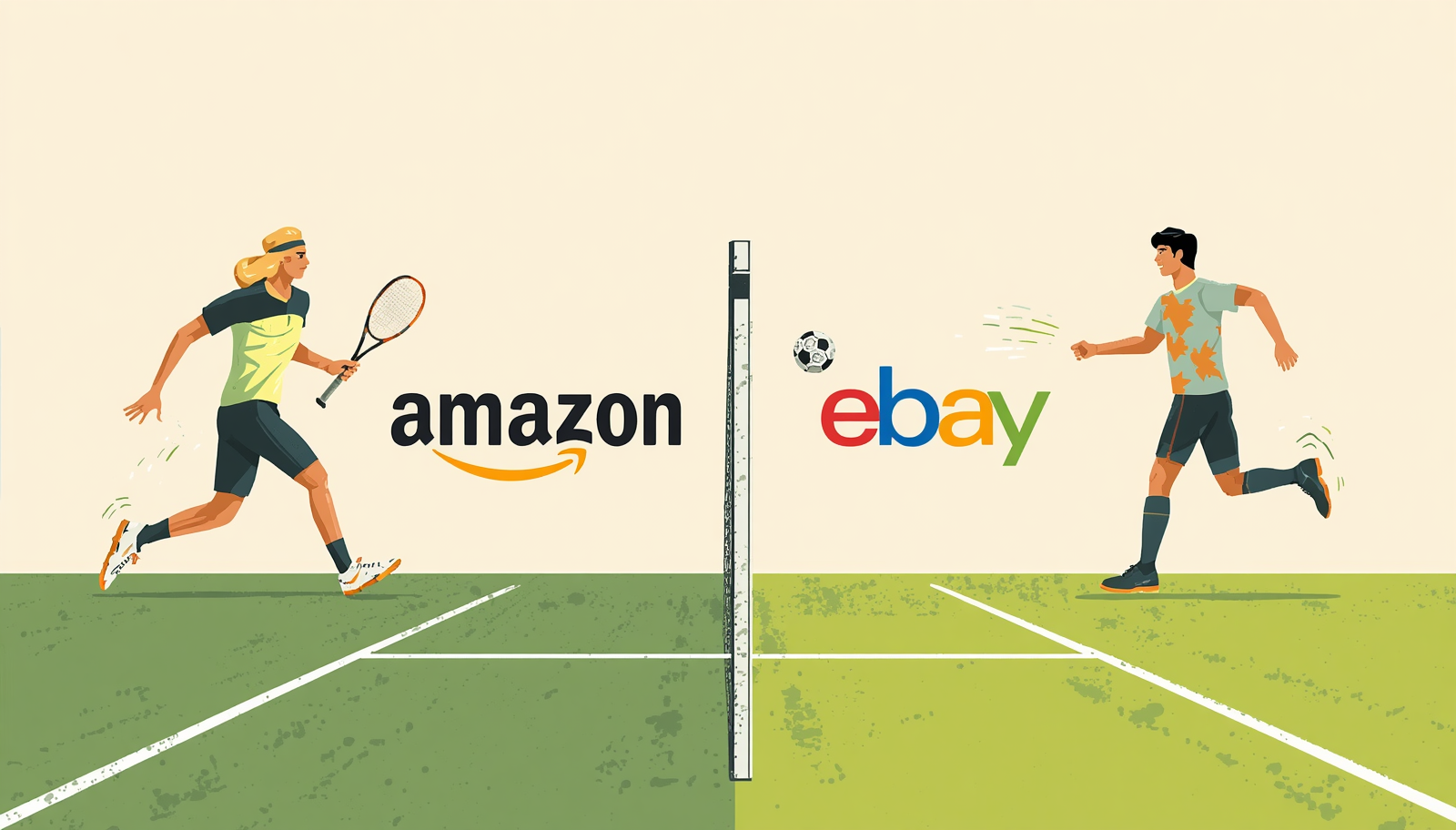
How tennis became the new soccer in Italy
I grew up in the 90s with tennis posters on my wall. Andre Agassi mostly, all bleached hair, denim shorts, and neon shirts that look gloriously cringy now, though they felt like the height of cool back then. I followed Pete Sampras serving people off the court, Boris Becker diving across the grass, Stefan Edberg gliding to the net. None of that was a national mood in Italy, to be clear. Soccer was the only sport that truly mattered here, the thing that owned every bar conversation, every newspaper back page, every Sunday afternoon, and my tennis obsession was a private and slightly eccentric exception in a country that lived for the Azzurri.
Something has shifted, and this time it is not just me. Walk into a bar in Rome or Milan today, and you are as likely to hear people arguing about a Jannik Sinner forehand as about a Serie A result. Tennis has gone mainstream in Italy in a way it never quite managed before, and the timing is hard to ignore, because it is rising exactly as Italian soccer goes through one of the bleakest stretches in its history.
From posters of Agassi to a nation of Sinner fans
The funny thing about nostalgia is that it makes you notice when a feeling comes back. The buzz I had in the 90s, rushing home to catch a match, is the same buzz I see now in people who never cared about tennis before. Except this time, the poster on the wall belongs to a 24-year-old from Sexten who became the first Italian man to hold the world number one ranking. Sinner reclaimed the top spot in April 2026 after winning the Monte Carlo Masters, his first Masters 1000 title on clay, and he already owns four Grand Slam titles.
Speaking of the 90s coming back around, I wrote before about the comeback of flip phones and about the shift from fax machines to AI over 25 years in localization. The thing you loved as a teenager has a way of returning in a new outfit. For me, then, this is a personal comeback. For Italy as a whole, it is the start of a new era, one that the country has lived through only once before, back in the 1970s.
A new era, the first since Panatta
To understand how new this really is, you have to go back to Adriano Panatta. In 1976, he won the French Open, becoming the first Italian man in the Open era to take a major singles title, beating Harold Solomon in the final. He is still the only player to have beaten Bjorn Borg at Roland Garros, and he did it twice. That same year, he led Italy to its first-ever Davis Cup title and climbed to world number four. For a short, bright stretch in the mid-70s, an Italian man stood among the very best in the world, and the country actually paid attention to tennis.
Then, for the better part of fifty years, very little. There were flashes, a decent Davis Cup run here, a promising name there, yet nothing that put Italian men’s tennis back among the global elite, which tells you how thin the pipeline ran for decades. What is happening now marks the first time since Panatta that the country stands on something far broader than a single pair of shoulders.
The numbers behind Italy’s tennis boom
This goes well beyond a vibe, and the data is striking. Italy now counts roughly 6.2 million tennis practitioners, closing in on the 6.5 million who play football, and around 1.2 million federation members, a jump of more than 200% compared to 2020. Requests for private tennis lessons rose 149% against 2023, which tells you the interest is converting into actual rackets in actual hands.
The money tells the same story. Revenue for Italian tennis climbed roughly 900% over two decades, from about 17 million euros in 2003 to nearly 170 million in 2023, and then hit 230 million euros in 2025. That last figure matters because it pushed the Italian Tennis and Padel Federation past the Italian Football Federation in revenue for the first time in history. Ticket prices at the Foro Italico now sit at levels unthinkable a decade ago, and people pay them.
Soccer’s empty chair
Here is the backdrop that makes the contrast so sharp. Italy, four-time world champions, has now failed to qualify for three straight World Cups: 2018, 2022, and 2026. The most recent blow came on March 31, 2026, when the Azzurri lost away to Bosnia and Herzegovina on penalties after a 1-1 draw. No other team that has ever won the World Cup has missed three in a row.
For a country that treated the national team as a kind of secular religion, watching the tournament on television from the sofa, again, has been a quiet humiliation. When the giant stumbles, attention looks for somewhere new to land, and tennis is standing right there, with a generation of players ready to catch it.
Roland Garros 2026: depth, not just one star
The lazy version of this story is “Italy has Sinner.” The interesting version is what happened at Roland Garros this June, because Sinner was not even the headline. He was cruising, two sets up and leading 5-1 in the third, when his body gave out in the Paris heat. He was sick to his stomach, got physically ill on court, and broke down before eventually losing to world number 56 Juan Manuel Cerundolo. He has since been running medical tests to get to the bottom of what happened. Watching him struggle like that was hard to take, and it spoke to the sheer physical brutality of best-of-five tennis in extreme heat rather than anything about his level or his nerve.
And Italian tennis barely missed a beat. Flavio Cobolli, Matteo Berrettini, and Matteo Arnaldi all reached the quarterfinals, the first time three Italian men made the last eight of the same Grand Slam in the Open era. Cobolli went all the way to the final, only the third Italian man to reach the Roland Garros singles final after Adriano Panatta in 1976 and Sinner in 2025. He lost to Alexander Zverev across five sets on June 7, yet the message was already delivered. This is a deep bench rather than a one-person show, and depth is exactly what turns a passing moment into a genuine era.
What Italy did right: a decentralized machine
A single champion can come down to luck, while a pipeline is the result of a system working as intended. Nearly fifteen years ago, the federation made a deliberate choice to decentralize, sending funding to local clubs and private coaches instead of pouring everything into one national academy. Players got to train close to home, in environments they knew, while still reaching the country’s best coaches. CNN called the result a “tennis machine,” and the rankings back it up, with nine Italian men inside the top 100 and five inside the top 50.
It reminds me that the strongest products rarely come from a single heroic feature. They come from infrastructure, from a lot of small, good decisions compounding over years, which is the same reason a deep tennis federation keeps producing finalists even when its biggest name goes out early.
eBay was the soccer of eCommerce
The parallel that fits best, though, comes from e-commerce. Think back to the late 90s and early 2000s, when eBay was the incumbent, the platform that more or less defined what shopping online even meant. Amazon, by contrast, launched in July 1995 as a glorified bookshop, the self-described “Earth’s Biggest Bookstore,” a niche player that sold books, then music and DVDs, while eBay ran the open marketplace everyone already knew. If soccer was the default everyone was born into, eBay was the eCommerce equivalent, and Amazon was the specialist hobby in the corner.
We all know how that turned out. Amazon kept expanding one category at a time until it became the everything store, and today it holds roughly 37.6% of the US eCommerce market, compared with eBay’s 3% or so. Amazon’s US gross merchandise volume is near 360 billion dollars, while eBay’s global GMV hovers around 18 to 20 billion dollars. The niche underdog became the monopolist, and the old incumbent got pushed back into a niche of its own. eBay still does well with collectors and specialists, with automotive parts and accessories making up its largest category, alongside collectibles, sneakers, and even bullion coins. The company is healthy and profitable, just no longer the name that defines the category.
Tennis played that Amazon role in Italy. It had a loyal base and decent infrastructure for years, but it was missing the one thing that turns an underdog into a leader: a breakout product that makes everyone want in. Sinner became that product, and the federation already had the distribution network in place to capture the demand. Indian Wells, Miami, Monte Carlo, the Italian Open, won on home clay for the first time by an Italian man in fifty years. Each title landed like another download, and the audience widened with every win.
That same move shows up across industries, which is partly why I find live shopping interesting as the next shift in e-commerce. A default is never as safe as it looks from the inside. In Italian sport, soccer was eBay, and tennis, for so long the specialist’s pursuit, turned out to be Amazon.
Why this matters beyond the scoreboard
What I find most interesting is less the sport and more the mechanism. Attention is the scarcest resource we have, in sport, in tech, in content, and incumbents always believe they own it permanently right up until they do not. The lesson cuts both ways. Soccer can absolutely come back, just as a sleepy tech giant can ship one great release and reclaim the room, so nothing here is written in stone.
There is a personal note in all this for me, too. My son looks remarkably like Novak Djokovic, a player my late father loved to watch for years. Dad would have been quietly thrilled to see an Italian finally on top of the world, and that thought sits with me every time Sinner walks out for a big match.
But for now, in Italy, the underdog won the platform war, and I get to feel like my teenage self again, rushing to catch a match, except the posters have changed, and so has the haircut.
Related sources
- ATP Tour, Sinner returns to world No. 1 after Monte Carlo 2026
- Olympics.com, ATP singles world rankings: Sinner ahead of Alcaraz
- FIRSTonline, Tennis beats football: Federtennis surpasses 230 million and overtakes the FIGC in 2025
- We the Italians, The tennis boom in Italy riding the wave of the Sinner effect
- Wanted in Rome, Italian tennis has overtaken football, and the Foro Italico prices prove it
- CNN, How Italy created a ‘tennis machine’
- Wikipedia, Adriano Panatta (1976 French Open and Davis Cup)
- Wikipedia, History of Amazon (from bookstore to everything store)
- ElectroIQ, Amazon vs eBay statistics: market share, GMV, revenue
- eBay Inc, Q3 2025 results (8-K, SEC)
- Olympics.com, Roland Garros 2026: Sinner’s injury-hampered exit to Cerundolo
- Roland-Garros official site, Arnaldi withdrawal sends Cobolli through to first Slam final
- ATP Tour, Cobolli reaches first major final, Italian quarterfinalists record
- Yahoo Sports, Italy’s timeline of missed World Cups: third straight FIFA failure
- The Globe and Mail, Italy’s shame: four-time champions watching the 2026 World Cup on TV
