
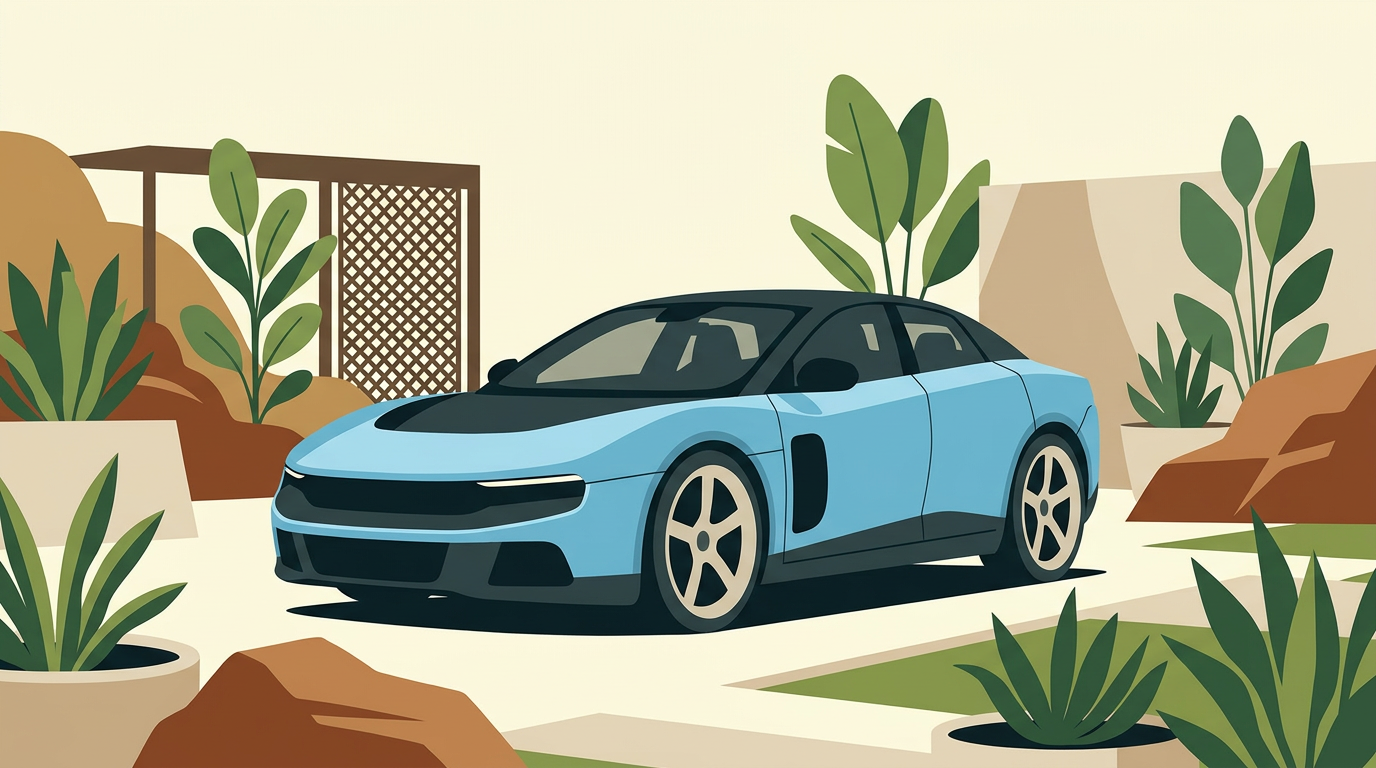
The Ferrari Luce is a triumph, wait for it
I don’t drive. This is a known fact about me, and yet here I am, incapable of shutting up about the Ferrari Luce. That alone should tell you something.
When Ferrari unveiled the Luce on May 25, 2026, the internet lost its mind. Within hours, the comments sections of every automotive outlet filled with people calling it a Honda Accord, an Apple Store minivan, a luxury toaster. Ferrari’s stock plummeted nearly 8% in Milan and over 5% in New York, erasing roughly $4 billion from the company’s market cap. Former Ferrari chairman Luca di Montezemolo went on record calling it a disgrace and suggesting they strip the prancing horse from its hood. Even the Italian government chimed in, because apparently that is what Italian politicians do.
And I get it. I really do. When you’ve spent decades dreaming of a low-slung, growling red beast, the idea of a pale blue, five-seat grand tourer designed by the man who made the iPhone is jarring. But here’s the thing: jarring is not the same as wrong.
That color is spot on
Let’s start with the light blue, because everyone has opinions about it. The official name is Azzurro La Plata, a soft metallic blue that Ferrari has offered before, and critics are treating it as if the brand had just painted over its soul.
But light blue on a Ferrari does not erase history. It rewrites it, and you only need to look at the 1980s to understand why that might be a good thing. The decade Ferrari was most culturally omnipresent was the decade of pastel, of excess, of anything goes. Tom Selleck drove a red 308 GTS on MaPI P.I. from 1980 to 1988. That car became arguably the most iconic Ferrari in history, not because it was rare or technically superior, but because it had personality and people saw themselves in it. The show ran for eight years. The car became a myth.
Azzurro La Plata is that same instinct applied to a new era. Where red screams heritage, light blue whispers something else: confidence, calm, a kind of assured luxury that doesn’t need to shout. The buyers Ferrari is targeting now are not the same people buying Ferraris twenty years ago. A 35-year-old who just sold their startup for half a billion dollars has a different aesthetic from a 55-year-old finance executive. Ferrari knows this. The color is a signal, not a mistake.
The design is not ugly, it is new
The Luce’s silhouette is round, glassy, and long, measuring 5,026mm nose-to-tail and only 1,544mm tall. It has a teardrop profile, sweeping aluminum wings, and a greenhouse roof held together using an unprecedented 40 individual glass elements, compared to the three or four you’d find in a typical luxury car. Critics calling it bland have been looking at the wrong thing.
What they’re missing is the interior, where the real design argument is being made. Jony Ive and Marc Newson’s studio LoveFrom spent five years in close collaboration with Ferrari’s own teams on this project. The result is a cockpit that draws directly from Ferrari’s own past: instrument graphics inspired by Veglia and Jaeger dials from the 1950s and 60s, a three-spoke steering wheel reinterpreting the iconic Nardi wooden wheel of the same era, mechanical buttons and dials made from glass and anodized aluminum instead of the touchscreens that dominate every other luxury electric interior on the market.
This is not a car that forgot where it came from. The retro-futurism is deliberate, rigorous, and traceable. The design nods to Ferrari’s golden age while refusing to live there. It is the difference between nostalgia and inspiration, and the Luce chooses the latter.
The market is going electric, whether you like it or not
Here is a number worth sitting with: the global luxury electric vehicle market was valued at roughly $190 billion in 2025 and is projected to reach $562 billion by 2035, growing at over 11% per year. That is not a niche. That is a tidal wave.
Luxury buyers are adopting electric vehicles faster than mass-market consumers, precisely because the performance characteristics of electric drivetrains, including instant torque and near-silent operation, align with premium expectations. A car that does 0 to 62 mph in 2.5 seconds and produces 1,035 horsepower is not sacrificing performance for sustainability. And with lithium-ion battery pack costs having dropped below $100 per kWh in 2025, the economics of long-range luxury electric vehicles have fundamentally shifted.
There is also the question of petrol. Supply chains are increasingly fragile, geopolitical pressures on oil are intensifying, and every major luxury manufacturer has committed to electric-only or electric-majority product portfolios by 2030 to 2035. Ferrari was not going to sit out the transition. The Luce is not a capitulation to trends. It is Ferrari deciding to lead rather than follow.
This car was built for someone specific, and that someone is not you (or me)
Ferrari’s chief marketing officer has been unusually candid about who the Luce is for: wealthy buyers who already own electric cars, who come from technology backgrounds, and who may never have considered a Ferrari before. The company has been deliberately targeting buyers in Silicon Valley and is openly hoping to rebuild market share in China, where internal combustion engine cars face mounting regulatory hurdles and long registration backlogs.
This is not the Ferrari of your poster. It is also not supposed to be. Ferrari sells roughly 13,000 cars per year and has deliberately maintained that scarcity. The Luce opens a new segment, the first five-seat Ferrari ever, aimed at a client who brings their family to Maranello in spirit as well as in the car itself. That is not a betrayal of the brand. It is the brand growing up.
The Prancing Horse stays on the hood. It should. Because a Ferrari that costs €550,000, goes 0 to 62 in 2.5 seconds, and was designed by the same man who shaped every iPhone you’ve ever loved, is very much in the business of selling dreams. The dreams look different now.
I can’t even drive, and I’m already obsessed
Let me be honest about what the real story is here. The real story is that a car unveiled five days ago has already taken up permanent residence in my brain, and I have very seldom sat behind a wheel in my life, except for a Fiat Panda in the 90s and, most recently, a Citroën Ami. The Luce is being talked about by people who will never buy it, never see it in person, and never even touch one. That is exactly what a dream car does.
The stock will recover. The internet will move on to the next outrage. Clients will walk into showrooms in the fourth quarter of 2026 when deliveries begin. They will sit inside that glasshouse cabin, run their fingers over those Nardi-inspired spokes and anodized aluminum dials, and feel something. Mark my word.
The Ferrari Luce is not a mistake. It is a bet on the future, placed by a company that has always understood, better than almost anyone else, that the most powerful thing a machine can do is make you feel something you can’t quite explain.
Related sources
- Ferrari Luce, Wikipedia
- Ferrari Luce official page, Ferrari.com
- Ferrari Luce: Interior & Interface Design, Ferrari.com
- New Ferrari Luce EV arrives with shocking design, 1,035bhp and £440k price, Auto Express
- Ferrari Luce: Italian sports car maker unveils its first electric car, CNN Business
- Ferrari shares fall after luxury carmaker launches first full EV, CNBC
- Ferrari Shares Slide Nearly 8% After Luce EV Backlash, Yahoo Finance
- Ferrari stock falls after unveiling of Luce, a new $640,000 EV designed by Jony Ive, Yahoo Finance
- Ferrari’s rocky EV launch may not be the disaster investors fear, CNBC
- Ferrari’s $640,000 electric car is getting roasted online, Fortune
- Think Ferrari Luce is ugly? Ferrari built it to win back China, not you, Car News China
- Ferrari Luce EV packs big power and tech in a contentious new design, Yahoo Finance
- The Interior of Ferrari’s Luce EV Draws Inspiration From the Past, InsideHook
- Ferrari launches first electric car by Jony Ive and Marc Newson, Dezeen
- Hate The Ferrari Luce If You Must, You’re Still Wrong, ROSSOautomobili
- MaPI’s PI’s famous red Ferrari 308 GTS, Adrian Flux
- Luxury Electric Vehicles Market Analysis Report 2026 to 2035, The Business Research Company
- Luxury Electric Vehicle Market Size & Share, GM Insights
