
Ultra-processed food: 235 corporate lawsuits against public health laws
I’ll admit it up front: every now and then I give in to a guilty pleasure, and I have no intention of making a drama out of it. The rest of the time I try to eat “clean,” I read labels, I’m happy to buy from local producers and I choose short supply chains whenever I can. My rule is simple: life’s pleasures shouldn’t be canceled, just portioned. That’s exactly why the investigation published in July by the Guardian with Lighthouse Reports, and picked up in Italy by Open, Il Fatto Alimentare and L’Espresso, caught my attention. To portion things, you need to know what’s on your plate, and some players are spending heavily to keep us in the dark.
The numbers: 235 legal actions in fifteen years
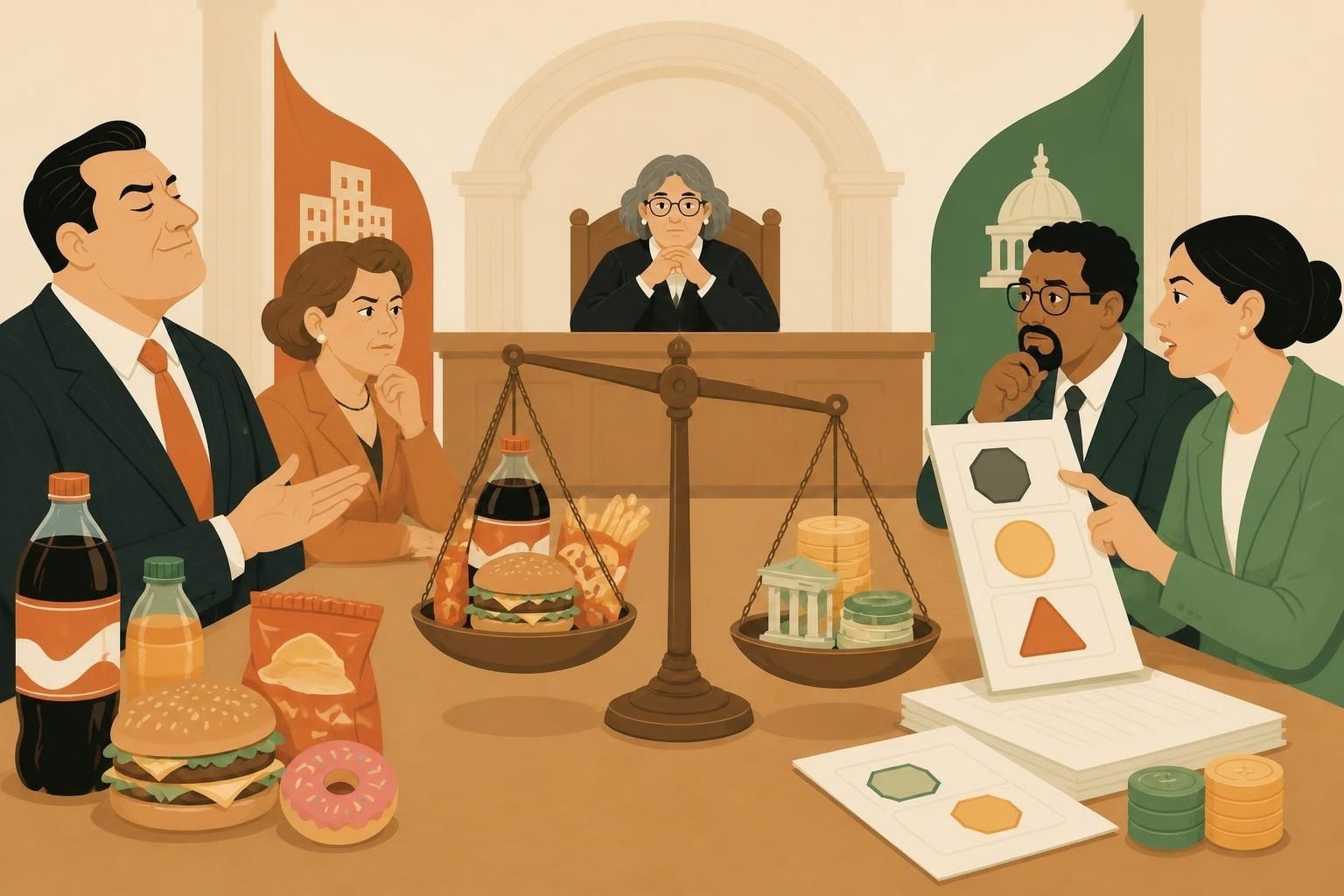
Between 2010 and 2025, ultra-processed food companies and their trade associations filed at least 235 legal challenges against the governments of Mexico, Colombia, Brazil, the United States and the United Kingdom. The target never changed: policies designed to fight obesity and diet-related disease, namely front-of-pack warning labels, taxes on sugary drinks and junk food, and limits on advertising aimed at children. Widening the lens to India, Lighthouse Reports counts 239 cases.
Added together, these proceedings amount to nearly 600 years of litigation, with an average length of two and a half years each. Three quarters of the suits were brought by food manufacturers or their associations, and 38% of those traceable to identifiable companies come from just eight groups: Coca-Cola, PepsiCo, Mondelēz, Kellogg’s, Danone, Ferrero, Xignux and Heartland Food Products Group. Coca-Cola tops the list with 24 direct actions, followed by PepsiCo with 17. On top of that, several multinationals asked judges to keep their identity confidential.
Mexico, the battleground of black warning labels
The main front is Mexico, with 193 cases, followed by Colombia (18) and Brazil (17); the United States accounts for 6 and the UK for just one. That’s no accident: Latin American countries were among the first in the world to introduce the black octagonal seals that flag excess sugar, fat, salt and calories. In Mexico, more than a third of schoolchildren and 41% of teenagers are overweight, yet in court the companies argued that the rules “demonized” their products and violated constitutional rights. One local Pepsi bottler went as far as claiming that in some rural areas soft drinks were safer to drink than the available water. Rather than defending a product, that argument captures a failure of public infrastructure and turns it into a sales strategy.
In Brazil, nearly every action came from trade associations, a way of keeping brand names out of the headlines; their members include Coca-Cola, Ferrero, Mars, Mondelēz, Nestlé and PepsiCo. Eleven suits targeted ANVISA, the health agency that has spent almost twenty years trying to regulate junk food advertising to children. In Colombia, the plaintiffs were formally private citizens, but many were lawyers who had previously worked for the food industry, and in 2022, while a tax on unhealthy products was being debated, sugary drink and ultra-processed food companies gave 5.85 million euros to political parties, 40% of all political donations that year.
Losing in court, winning on the calendar
The most unexpected figure is a different one: in cases that have reached a verdict, governments won three times out of four. So why keep going? Because winning in court isn’t the main goal. Every year of litigation is a year in which products stay on shelves unrestricted, while health ministries burn through budgets on lawyers and expert reports. Phillip Baker, a professor at the University of Sydney, puts it this way: lawsuits serve to delay, deter and paralyze regulators, even before they aim to overturn laws.
Marion Nestle, professor emerita of nutrition at New York University, told the Guardian the industry is following a script borrowed from Big Tobacco: when everything else fails, sue. She adds a point I find illuminating: if they fight this hard, it means these measures work and cut sales. In August, World Health Organization Director-General Tedros Adhanom Ghebreyesus also accused large food companies of saddling countries with billions in health and legal costs.
Ferrero and the pre-action letters in the UK
For Italian readers, the most uncomfortable chapter concerns Ferrero. The Alba-based group appears in four direct cases, is involved in proceedings in Mexico and sits on the Brazilian associations that sued ANVISA. In the UK, after Kellogg’s lost its challenge to the nutrient profiling model that restricts the promotion of foods high in sugar, salt and fat (back in 2021 the company had argued that cereals should be assessed together with the milk they’re eaten with), Ferrero and its subsidiary Eat Natural sent the Department of Health pre-action letters over the same rules. Meanwhile, Ferrero has acquired WK Kellogg Co.
The company replied that it supports public health goals and that its dealings with authorities concerned clarity in how the rules are applied, such as similar products being treated differently, rather than opposition in principle. Coca-Cola and Danone took a similar line, while PepsiCo, Mondelēz, Kellogg’s, Xignux and Heartland did not respond.
And Italy? A postponed sugar tax and no rules on ads
In Italy, companies haven’t needed to drag anyone before a judge, and the reason is hardly reassuring: there are no rules to challenge. There is no legal definition of ultra-processed food, no limits on junk food advertising aimed at minors, and the sugar tax, approved in 2019, has been postponed eight times and is heading for a ninth delay in the next budget law. Meanwhile, fourteen EU member states already tax sugary drinks. On labeling, Italy opposed France’s Nutri-Score by promoting its own Nutrinform Battery, a stance shared by Ferrero and the farmers’ association Coldiretti.
The health picture isn’t encouraging: according to ISTAT, in 2025 one in four minors aged 3 to 17 was overweight, peaking at 32.3% among children aged 3 to 10. Ultra-processed foods make up about 23% of Italians’ energy intake, compared with roughly 50% in the UK and the US, but that share has been rising for fifteen years. We’re living off the Mediterranean diet’s reputation, and sooner or later that credit runs out.
My small indulgence and the right to choose it
Back to my portioning rule. Indulging now and then is a choice, and a choice requires clear information: a seal on the label doesn’t forbid me anything, it simply tells me what I’m about to eat. I’ve written before about confectionery brands that were part of many Italians’ childhoods, from Rossana candies to Viennetta, and I understand the appeal of those flavors. Precisely because I see them as a treat to enjoy once in a while, I’m surprised that anyone would spend years and fortunes on litigation just to avoid warning us that they aren’t healthy. A company confident in its products should have little to fear from an honest label. If it fights one so stubbornly, perhaps it already knows that, properly informed, many of us would eat a little less. That might have been true in the eighties and nineties, when nutrition education and access to information were limited. Today, all things considered, I make my choices with awareness.
Related sources
- ‘If all else fails, sue’: how ultra-processed food firms are using the courts to obstruct health rules, The Guardian, July 22, 2026
- Big Food vs. The People, Lighthouse Reports, July 22, 2026
- Da Coca-Cola a Ferrero, le 235 cause delle multinazionali contro le leggi sul cibo spazzatura, Open, July 22, 2026 (in Italian)
- Big Food contro la salute pubblica: 239 cause per fermare etichette, tasse e nuove regole, Il Fatto Alimentare, July 22, 2026 (in Italian)
- La guerra segreta di Big Food: come i giganti del cibo spazzatura tengono in ostaggio la nostra salute, L’Espresso, July 22, 2026 (in Italian)
- Il direttore dell’OMS dice che è ora di piantarla con le cause legali delle aziende di ultra processati, Dissapore, August 3, 2026 (in Italian)
- Sugar tax 2027, cosa cambia e quanto costeranno le bibite, Money.it (in Italian)
