
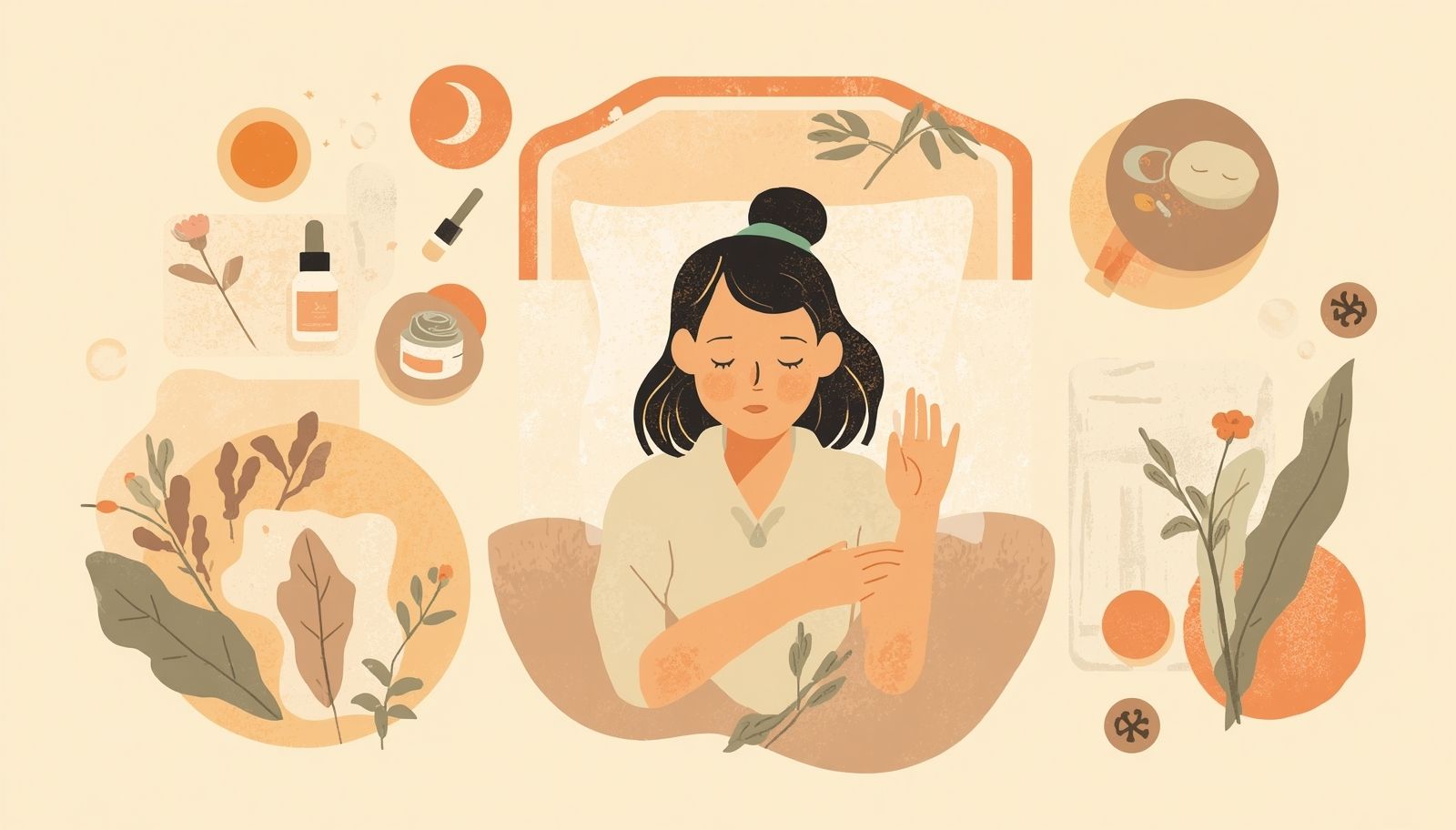
What sleep maxxing is, the trend among young South Koreans
Sleep maxxing is the latest obsession to come out of Seoul. As reported by ANSA, drawing on the Korea Times, a growing number of young South Koreans are trying to optimize the quality of their rest with evening routines, tech gadgets and dedicated products. The name pairs “sleep” with “maxxing,” online slang for pushing something to peak performance. The stated goal is not to sleep longer, but to systematically improve the hours people already get.
The toolkit includes smartwatches that track duration and deep sleep phases, eye masks, earplugs, supplements and massagers. It closely resembles the ten-step skincare kit, except that here the thing being cared for is the whole night.
From the miracle morning to rest as a routine
There is some irony in this arc. Until recently, the same young Koreans were into the “miracle morning”: waking at dawn and devoting the first hours of the day to study, exercise and personal growth. Now the pendulum is swinging the other way, and performance has moved from the morning to the pillow.
The reason is easy to guess. The “Quality of Life of Youth 2025” report from South Korea’s national statistics office found that 32.2% of people aged 19 to 34 experienced burnout in 2024. The ANSA piece also cites figures from the Health Insurance Review and Assessment Service showing that patients treated for sleep disorders rose from 1.04 million in 2020 to 1.3 million last year. This is a country that has been short on sleep for a long time: according to 2016 OECD data, Koreans slept an average of 7 hours and 41 minutes, 41 minutes below the member-country average of 8 hours and 22 minutes, as the Korea JoongAng Daily has reported. Things have gotten to the point that in May, Seoul even held a napping contest along the Han River.
I have already written about chronic exhaustion among people who work with digital tools every day, in my piece on AI fatigue: the need to unplug cuts across generations and latitudes.
Beauty sleep according to science
Our grandmothers already said that a rested face is a more beautiful one, no app required. What is new is that over the past fifteen years, research has proven them right with hard numbers.
In 2010, a team at Karolinska Institutet led by John Axelsson published a study in the BMJ with a telling title, “Beauty sleep.” Twenty-three volunteers aged 18 to 31 were photographed twice, after a normal night and after sleep deprivation, without makeup and with a neutral expression. Sixty-five observers, unaware of the condition, rated the sleepy faces as less healthy, less attractive and more tired.
The same group returned to the subject in 2017 in Royal Society Open Science, with a design closer to real life: two consecutive nights of reduced sleep instead of a single all-nighter. With 25 participants and 122 raters, the result held and added a curious social detail: after restricted sleep, people looking at the photos said they were less willing to socialize with those individuals. Perceived trustworthiness, by contrast, stayed the same.
What happens to your skin when you sleep badly
On the dermatology side, a study presented in 2013 by University Hospitals Case Medical Center in Cleveland compared 60 women aged 30 to 49, half of whom were poor-quality sleepers. Their intrinsic skin aging score came out twice as high, 4.4 versus 2.2. After a mild disruption of the skin barrier, good sleepers also recovered 30% better over the following 72 hours, and redness from UV exposure faded faster too.
One detail deserves a mention, though: the research was commissioned by Estée Lauder, a company that lives on night creams. Nothing scandalous, but a reason to read the findings with due caution, especially when a trend turns into a store shelf.
K-beauty, a record-breaking industry
Sleep maxxing did not appear out of nowhere: South Korea has built one of its most successful exports on skincare. According to Korea Customs Service data reported by Personal Care Insights, Korean cosmetics exports hit a record $8.52 billion in the first nine months of 2025, up 15.4% year over year, with products sold in 205 countries. The United States overtook China as the top market, and basic skincare alone is worth more than $6 billion.
In Italy, shelves stocked with serums, patches and sheet masks have multiplied, and very young girls are among the shoppers. A Panorama investigation into the so-called “Sephora kids,” girls aged 6 to 11 hooked on anti-aging routines, ranks Italy fourth in the world for the spread of the phenomenon, after the United States, South Korea and China, with estimated sales of around $20 million. Dermatologist Angelo Marzano of the University of Milan warns that using adult formulas too early exposes children to irritation, worsening atopic dermatitis and contact allergies.
In this respect, sleep has an undeniable advantage over any serum: it is free, it never expires and it contains no exfoliating acids. The catch is that the moment it gets measured and optimized, it too risks becoming a box to tick. I touched on this when writing about health wearables and about game mechanics that wear thin over time, in my piece on gamification.
Laziness, genes and gray blending: my experience
I confess: I am truly lazy. Ten-step routines exhaust me just reading about them, and the idea of tracking my sleep phases with the same dedication others bring to counting steps makes me want to go to bed early, without a smartwatch.
And yet people often guess I am younger than I am, despite the gray blending I have now let take over my hair. I don’t think I have a secret to share: I put it down to luck, and to a mother with beautiful skin.
Science, in this case, seems to be on my side. A study published in 2009 in PLoS ONE, involving 102 pairs of Danish twins and 162 British women, concluded that perceived age, wrinkles and sun damage depend more or less equally on genetic and environmental factors, while hair graying is largely inherited. According to the authors, women who look younger for their age avoid sun exposure and carry genes that protect against gray hair and wrinkles. In my case, it seems, the genetic lottery rewarded my skin and gave up on my hair. Here too, in fairness, the funding came from a cosmetics giant, Unilever.
The moral: good sleep helps, the right cream maybe too, but a sizable share of the result is decided by our chromosomes. Sleep maxxing deserves credit for putting rest back at the center, as long as it doesn’t become yet another fixation. I wish young Koreans peaceful nights; as for me, I’ll keep thanking my mother.
Related sources
- La nuova tendenza in Corea del Sud è lo sleep maxxing, ANSA, October 7, 2026
- Beauty sleep: experimental study on the perceived health and attractiveness of sleep deprived people, Axelsson J. et al., BMJ, 2010
- Negative effects of restricted sleep on facial appearance and social appeal, Sundelin T. et al., Royal Society Open Science, 2017
- Sleep deprivation linked to aging skin, study suggests, ScienceDaily / University Hospitals Case Medical Center, 2013
- Why some women look young for their age, Gunn D.A. et al., PLoS ONE, 2009
- Korea leads in sleep debt in addition to household debt, Korea JoongAng Daily, 2022
- US surpasses China as K-beauty’s top market amid record-breaking exports, Personal Care Insights, 2025
- Bambine schiave del trucco: l’ossessione per l’anti-age a 10 anni, Panorama, 2026
