
The poetic factory: when brand names were invented by artists
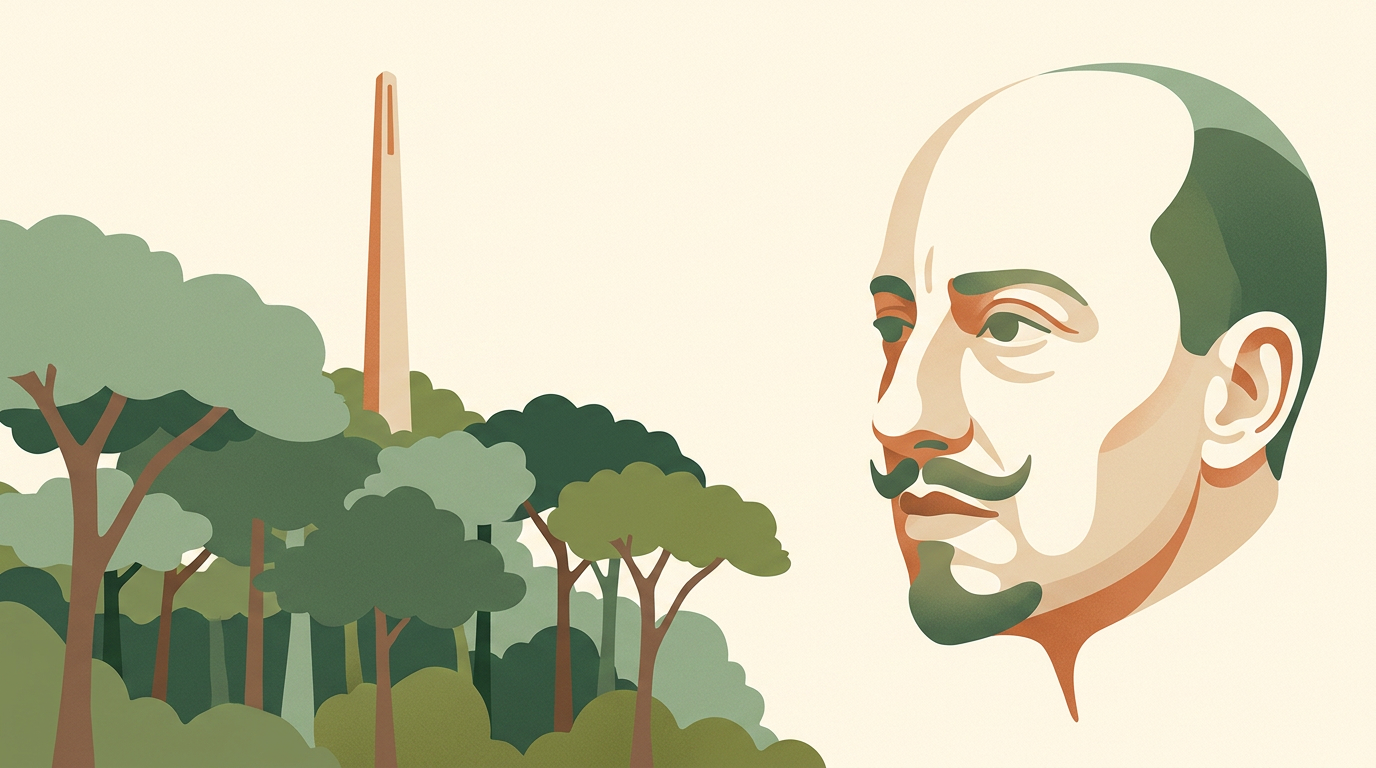
D’Annunzio has been part of my life for as long as I can remember. I grew up in his hometown, on a street named after one of his works, Via Terra Vergine, like the 1882 collection of Abruzzese short stories. Even now, from the window of my new Adriatic home, I can see the obelisk dedicated to him rising from the famous pine grove, next to the landmark theater that bears his name, sadly closed for some years now due to structural problems. In Pescara, the Vate is not a page in an anthology: he is the street names, the landscape, and everyday life. Perhaps that is why it has never surprised me that his words still live on today, even where you would least expect them: on supermarket shelves.
Before naming agencies existed, with their briefs and their market research, the christening of a product could be entrusted to a poet. And no one took the job more seriously than D’Annunzio, who, between one exploit and the next, built a small catalog of brands that are still alive.
D’Annunzio, Italy’s first brand namer
The most famous case is La Rinascente. When Senatore Borletti took over the “Aux Villes d’Italie” department stores, he asked the Vate for a new name; D’Annunzio proposed “Rinascente” (“rising again”), and the name proved prophetic twice over: a few days before the 1917 opening, a fire destroyed the building, and the stores literally rose again from their own ashes.
In 1922, he christened SAIWA, an acronym of “Società Accomandita Industria Wafer e Affini”: a technical name disguised as an exotic word, one that sounds English but is Genoese. In the same decade, he gave the name (or at least the consecration) to Parrozzo, the Abruzzese cake created by Luigi D’Amico and inspired by the rustic peasant “pane rozzo” (rough bread), for which he also wrote a promotional madrigal, in effect an advertisement in verse. To the Abruzzese liqueur made by Amedeo Pomilio, he gifted the name Aurum with a Latin dedication (“levis ponderis aurum”, 1922). And to Amaro Montenegro, he gave not the name but something perhaps more precious: the epithet “liquore delle virtudi” (the liqueur of virtues), written in his own hand in a 1926 letter that the company still uses as a claim today.
Alongside the brands, there are the neologisms that entered everyday Italian: velivolo for aircraft (from a nautical adjective meaning “that seems to fly with sails”), fusoliera (fuselage), tramezzino (the Italianization of the sandwich, according to tradition exclaimed at the Mulassano café in Turin), scudetto (the champions’ badge in Italian football, born in Fiume for the jerseys of a football match), vigili del fuoco for firefighters (modeled on the Roman vigiles, officially adopted in 1938).
The Futurists: from words-in-freedom to words in the shop window
The Futurists went a step further: they did not lend their genius to brands; they wanted to refound the entire lexicon of consumption. The Manifesto of Futurist Cooking (1932) by Marinetti and Fillìa proposed replacing foreign loanwords with freshly minted neologisms: the cocktail becomes a polibibita (“multi-drink”), the bar a quisibeve (“here-one-drinks”), the sandwich a traidue (“between-two”), the dessert a peralzarsi (“for-getting-up”), the picnic a pranzoalsole (“lunch-in-the-sun”). Almost none of them took root, unlike D’Annunzio’s tramezzino, but the gesture is the same: treating naming as a poetic and, at the same time, political act.
On the visual side, Fortunato Depero worked with Campari from 1926 to 1936 and in 1932 designed the inverted-cone bottle of Campari Soda, still in production today: not a name, but proof that for the Futurists a product’s identity was art in its own right (“the art of the future will be powerfully advertising-driven,” Depero wrote).
The international cases
Abroad, the phenomenon takes different forms. In 1969, Salvador Dalí designed the Chupa Chups daisy logo in a single hour; ever the strategist, he suggested printing it on top of the lollipop, so it would always remain visible and intact. Here too: not the name (which comes from the Spanish chupar), but the artist’s signature on the identity.
On the verbal front, the Anglo-Saxon tradition runs through novelist-copywriters. Salman Rushdie, before Midnight’s Children, coined “Naughty but nice” for cream cakes and “Irresistibubble” for the Aero chocolate bar as an adman: a portmanteau worthy of a Futurist. Fay Weldon is linked to the famous “Go to work on an egg” of the British Egg Marketing Board (whose creative team she led at Ogilvy).
A linguistic reflection: the brand as minimal poetry
What makes a poet a good inventor of names? Naming is, at its core, the degree zero of poetry: condensing an image, a sound, a promise into a handful of syllables. D’Annunzio’s techniques are those of the poetic workshop of all time: resemanticization (“Rinascente” is a present participle that turns a fire into a founding myth), learned retrieval (velivolo draws on a nautical Latinism, vigili del fuoco on ancient Rome), the domesticating calque (tramezzino tames the sandwich with an affectionate diminutive), even the acronym treated as a full word (SAIWA works because it sounds, before it means anything).
Then there is a lesson about the survival of words: the names that take root are those grafted onto native morphology and phonotactics (tramezzino, scudetto, velivolo), while the programmatic ones, transparent to the point of parody, die out (quisibeve, peralzarsi). The successful commercial neologism does not declare itself a neologism: it passes itself off as a word that has always existed.
And here the parallel with today becomes almost inevitable. The debate on inclusive language, which I covered in a roundup on my blog, replays the same dynamic: top-down solutions like the schwa (ə) or the asterisk struggle to take root just like the Futurist quisibeve, because they force the phonotactics and morphology of Italian instead of working with them. They cannot be pronounced, they cannot be inflected, they do not feel as if they had “always existed.” Inclusive language that works, like naming that works, operates within the rules of the language, not against them: rephrasing, strategic plurals, names that welcome without announcing it. D’Annunzio’s lesson, in the end, still holds: language cannot be commanded, it must be seduced.
Finally, the historical reversal: today naming is an industrial discipline, but it was born as an author’s gesture. And perhaps brand names are the only literary genre in which D’Annunzio is still, every single day, on everyone’s lips.
Related resources
From my blog:
- What is inclusive language? A roundup — Content Benefit
- Italian shelf brands as digital products — Content Benefit
- The Coca-Cola plan for Abruzzo — Content Benefit
External sources:
- 10 parole inventate da D’Annunzio — Focus
- D’Annunzio, lessico e nuvole — Treccani, Lingua italiana
- D’Annunzio pubblicitario e linguista — ChietiToday
- Il Futurismo e il lessico del cibo — Informatore Coop / Accademia della Crusca
- Formulario futurista per ristoranti e quisibeve — Wikisource, La cucina futurista
- Chi disegnò la bottiglietta del Campari Soda? — Focus
- Amaro Montenegro, l’elisir di lungavita di Stanislao Cobianchi — Vinhood
- Chupa Chups logo, designed by Salvador Dalí — Logo Design Love
- Who Wrote the Advertising Slogan ‘Go to Work on an Egg’? — Interesting Literature
- Writers and Copywriters: Literature and Advertising — Interesting Literature
