
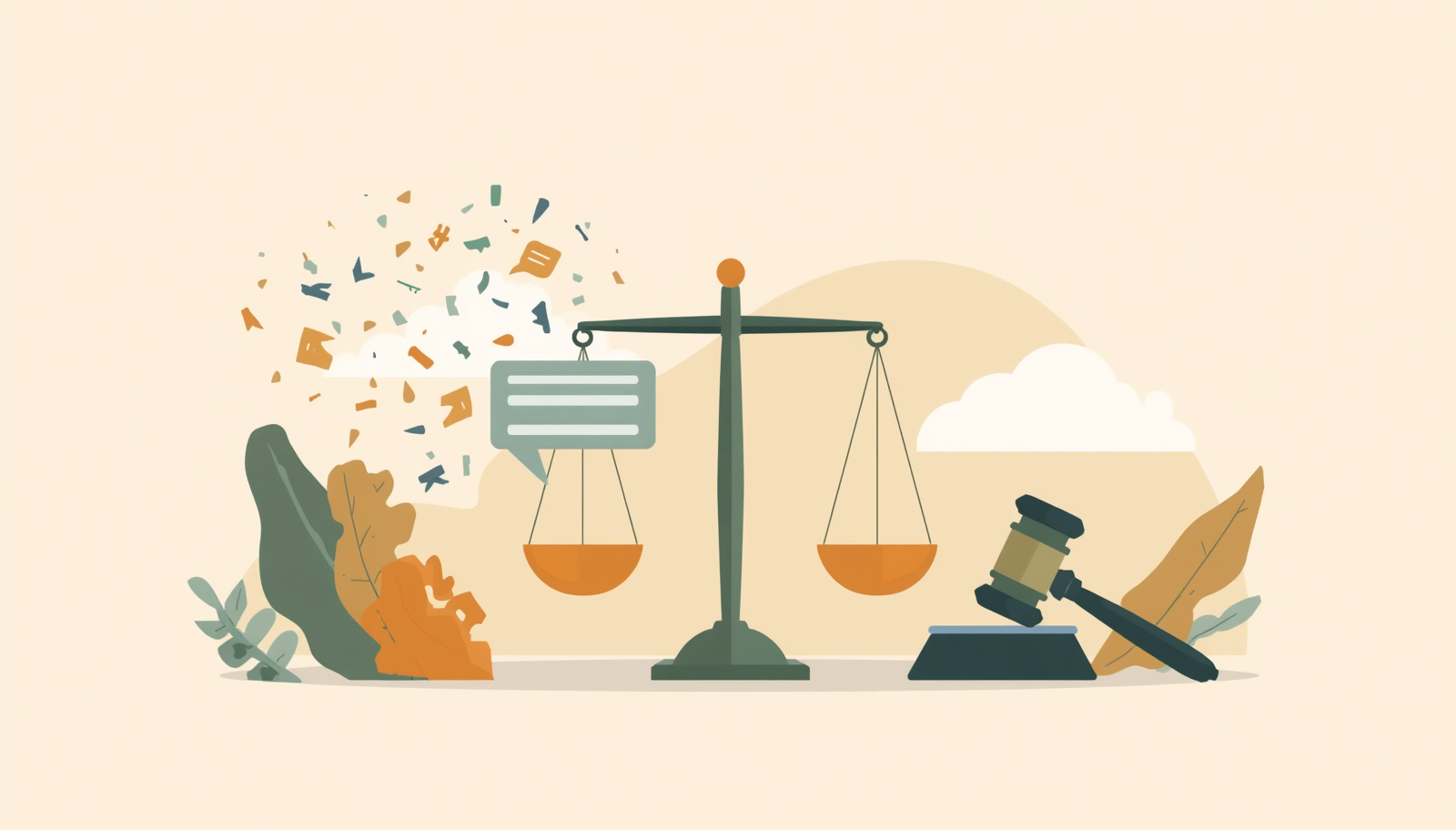
Google is now legally on the hook for what its AI says
A regional court in Munich just did something no court had done before. On May 28, 2026, the Landgericht München I ruled that Google is directly liable for the false claims its AI Overviews produce (case 26 O 869/26). Not the websites it links to, Google itself. If you have spent the last two years watching tech companies shrug and point at “the model,” this is the moment the shrug stopped working, at least in Bavaria.
I have been chewing on this one for days, because it sits on the fault line I care about: who owns the words a machine writes when those words ruin someone’s name.
What the Munich court actually decided
The judges drew a line that sounds technical but matters enormously. A classic search result is a list of links, neutral pointers to other people’s pages. An AI Overview is different. It reads, restructures, and then writes something new in Google’s own voice. The court called these “independent, new, and substantive statements,” which means they count as Google’s own content rather than a tidy summary of someone else’s.
That single distinction is the whole ballgame. Once the output is treated as Google speaking, the usual platform defense evaporates. The court issued a preliminary injunction forbidding Google from repeating the false claims, attached a possible penalty of up to 250,000 euros for non-compliance, told Google to cover most of the legal costs, and said the order applies internationally rather than just inside Germany.
Two publishers and an accusation nobody could trace
Here is the part that should worry anyone who publishes for a living. The case came from two Munich publishers whose names the AI Overview tied to scams, subscription traps, and “dubious business practices.” The catch: those accusations did not appear in the underlying search results at all. The model had essentially invented them, then served them with the calm confidence of a reference desk.
I often write about this confidence problem. It is the same quiet trap I described in my piece on Lorem ipsum, where AI fills a space with copy that sounds finished before anyone has checked whether it is true. A fabricated fraud allegation is the high-stakes version of that, and for a publisher whose entire business is trust, it can do real and lasting damage.
This is not the first time a machine has gotten someone in trouble
The Munich ruling did not arrive out of nowhere. The ground had been shifting for a while.
Back in February 2024, the British Columbia Civil Resolution Tribunal found Air Canada liable in Moffatt v. Air Canada, after its website chatbot promised a bereavement refund policy that did not exist. The airline argued the chatbot was a “separate legal entity” responsible for its own answers. The tribunal was unimpressed and ordered Air Canada to pay, reasoning that a company owns everything on its site, whether static pages or chatbots.
Then there is the defamation wave. In 2023, Australian mayor Brian Hood prepared what would have been the world’s first defamation suit against OpenAI, after ChatGPT claimed he had served prison time in a bribery scandal he had actually reported as a whistleblower. Around the same time, US radio host Mark Walters sued OpenAI because ChatGPT described him as a treasurer accused of embezzling from a gun-rights group, a role and a crime that simply never happened. Different countries, same pattern: a model states an untruth in an authoritative tone, and a real person pays for it.
What makes Munich the heavier precedent is the framing. The earlier cases treated AI output as a company’s responsibility by extension. The German court went further, calling it the company’s own speech.
Where I land on responsibility
Now, my honest take is a little against the grain.
I think reasoning still belongs to us. Checking a source, noticing when an answer feels off, cross-reading before you repeat a claim, those remain human jobs, and I would argue they always should. I make this case in my notes on the daily struggles of using AI: the tools save hours, yet a wise user keeps a hand on the wheel. Google’s disclaimer, for what it is worth, is fairly clear that AI Overviews can contain mistakes.
So I hold two thoughts at once. The publishers very likely deserve compensation, because reputational harm is concrete and a fabricated fraud label is not a rounding error. A brand can spend years building trust and lose it in a sentence, something I learned the slow way in my customer-support story. At the same time, I get uneasy when we expect AI to absorb the full blame for every reasoning slip. We do not hold social platforms responsible for everything their users post, and I am not sure we want a world where a model is treated as the sole author of every conclusion a reader draws from it.
The court’s answer to my discomfort is sharp, and worth sitting with: an AI Overview is not user-generated content. Google wrote it. By that logic, the social-media comparison does not hold because there is no third-party user to point at, only the company and its software. I still feel the pull of personal responsibility, yet I will admit that the legal reasoning has a clean edge that my analogy lacks.
So what changes for the rest of us
If you publish anything online, set up a habit of searching your own brand name inside AI summaries, the way you already track Google through its products. Catching an invented claim early is far cheaper than litigating it later.
And if you build with these tools, treat Munich as a preview rather than a one-off. Google has signaled it will challenge the ruling, so this is not settled. But the direction is clear: the more your AI speaks in its own voice, the more those words are legally yours. The same reasoning is already drifting toward what AI agents are allowed to do on our behalf, where the output stops being a sentence and becomes a transaction.
Related sources
- Landmark German ruling declares Google’s AI Overviews are Google’s own words, The Decoder
- Google is liable for its AI Overviews, German court rules, The Next Web
- Google challenges court ruling of liability for false AI-generated claims, MediaPost
- LG München I: Google haftet für Inhalte aus AI Overviews, ContentConsultants (case number and 250,000 Euro penalty)
- BC Tribunal confirms companies remain liable for information provided by AI chatbot, American Bar Association (Moffatt v. Air Canada)
- Australian mayor readies world’s first defamation lawsuit over ChatGPT content, The Globe and Mail (Brian Hood)
- OpenAI sued for libel after ChatGPT allegedly accused a man of embezzlement, Gizmodo (Mark Walters)
