
AI notetakers in meetings: the lawsuits against Otter, Granola and Fireflies
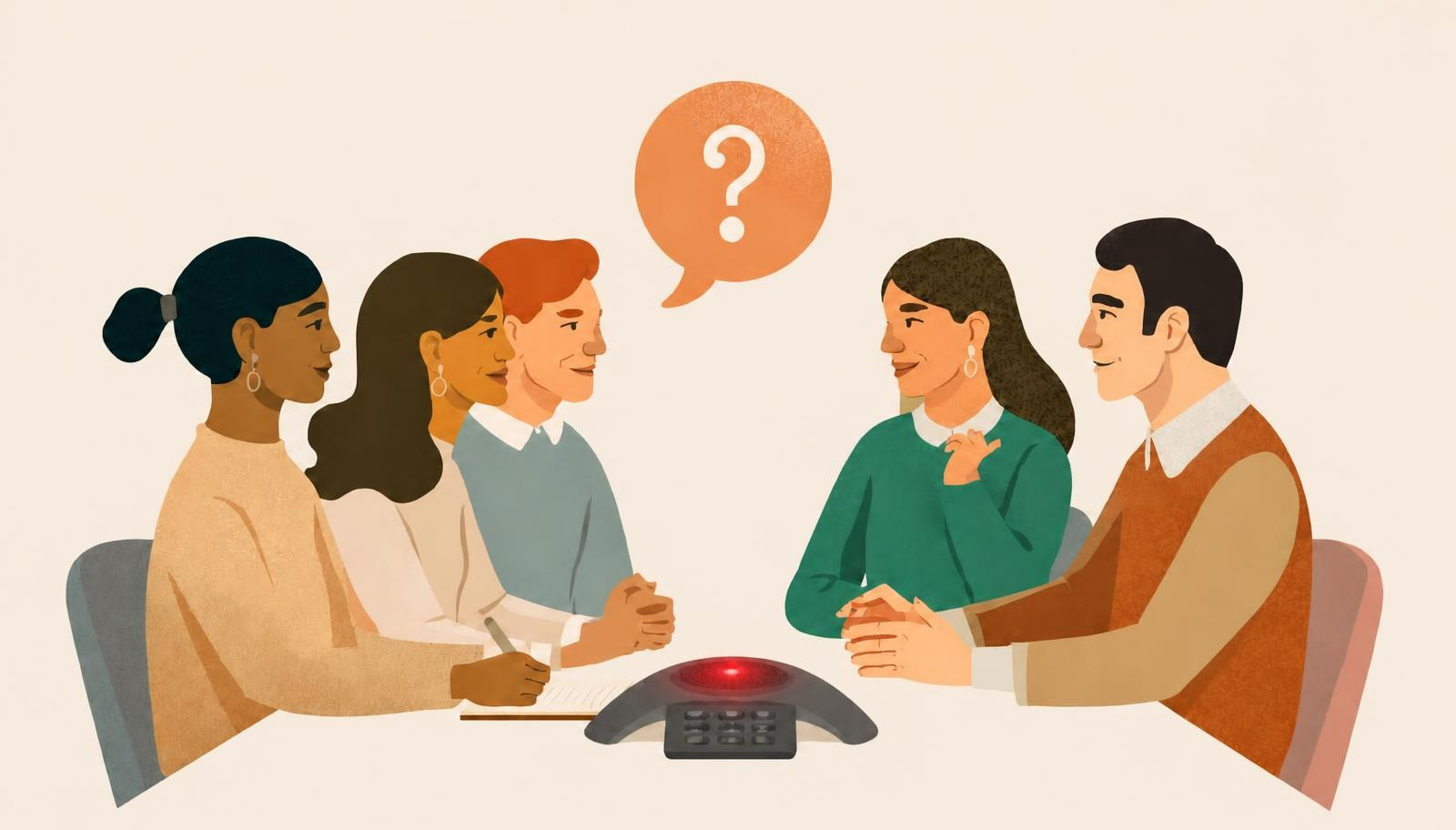
AI notetakers, the assistants that record, transcribe and summarize video calls, slipped into our calendars almost unnoticed. These days it’s common to join a meeting and find, next to colleagues’ faces, three black tiles with a product name where a person’s name should be. Nobody introduced them, yet they listen to everything and, once the call ends, deliver the summary to every participant’s inbox.
In 2026 this quiet presence ended up in court. On August 13, federal judge Eumi K. Lee of the Northern District of California rejected the core of Otter.ai’s motion to dismiss. The class action grew out of Brewer v. Otter.ai, filed in August 2025 and later consolidated with three other suits, and claims that OtterPilot automatically joins calendar meetings, recording even people who have no account and never gave permission. The wiretapping claims under federal law, California’s privacy statute and BIPA, Illinois’s biometric data law, all survive. According to the judge, it’s plausible that Otter used the conversations for its own purposes, including training its machine learning models: if so, the company would count as a third party eavesdropping rather than a mere service provider. CEO Sam Liang responded that lawsuits are part of doing business and that his product takes notes just like Microsoft Copilot or Zoom.
On July 30 came Chamberlain v. Granola, also in California. The complaint alleges that the app captures audio straight from the user’s computer without appearing among the participants, and that it markets this very invisibility as one of its strengths. In Illinois, meanwhile, Fireflies.AI faces two suits (December 2025 and March 2026) over its Speaker Recognition feature, which according to the plaintiffs extracts voiceprints without any written authorization.
Consent comes from whoever installs the app, not from those on the call
Read with a product designer’s eyes, these cases expose the flaw right away: the green light comes from a single person, the one who connects their calendar to the tool. Everyone else is a guest of a decision made elsewhere. According to one of the four Otter suits, the recording notice for participants was available only on the premium plan: picture that line on the pricing page and it becomes clear how optional permission was considered. Granola offers chat notifications and video watermarks, but they are features to switch on, so they start off.
The numbers confirm the gap. A July survey by Kolmogorov Law of 500 US workers found that a third of them had attended meetings with a notetaker. Of these, only 34.7% say they were always asked beforehand, while one in four was never consulted. And 65% of the sample don’t know the rules on consent to recording.
What happens to trust among colleagues when everything gets transcribed
A colleague taking notes by hand filters, condenses, leaves out the joke made to ease the tension. The bot keeps every word, hesitations included. According to Fellow.ai’s 2025 survey, 84% of professionals change the way they speak when an AI assistant is on the call. Fortune has reported cases where the tool kept recording after some participants had left, then sent the whole team the remarks exchanged while the mic was still live.
In late August, Tim Bajarin at Forbes pointed to another risk: a brainstorming session can turn into evidence usable in court. No wonder several legal departments are pulling notetakers out of their most sensitive meetings, and the New York City Bar Association has asked its members to weigh with clients whether to record at all.
There’s also a counterintuitive finding worth reporting: a Read AI study of nearly 160,000 meetings found that, with a notetaker present, women spoke 9% more than men relative to their share of attendees. Some people, it seems, speak up more precisely when they know their words will stay on record.
The summary helps me, but I won’t be the one letting the bot in
I admit the end-of-call summary is handy, especially after a long video meeting with decisions scattered between one digression and the next. Having it already organized saves me from reconstructing from memory who has to do what. At the same time I fully understand people who are wary, which is why I’ve given myself a rule: I will never be the one to hit “admit” when the bot knocks at the waiting room. Whoever wants it in the meeting takes responsibility in front of everyone, out loud, at the start. A lack of courage, perhaps, but I’d rather not be the person who let the extra ear in.
Microsoft Teams puts bots in the waiting room
Platforms are moving too. On August 21 Microsoft announced a new Teams policy that detects recording and transcription bots and, with the default setting, parks them in the lobby: the organizer decides whether to let them in. The rollout wraps up by the end of September. The change of default only looks small, because it moves the moment of choice from a setting forgotten in a calendar to a gesture everyone can see, in real time. Anyone who read my piece on the design of silence knows how much initial configuration shapes people’s behavior.
In Europe and Italy, GDPR and labor law apply
On this side of the Atlantic the framework differs, but it’s just as demanding. As Tom’s Hardware Italia noted in August, GDPR requires a clear legal basis and a notice before recording. Article 4 of Italy’s Workers’ Statute demands adequate information on how collected data will be used. Transcripts, moreover, can’t be repurposed to evaluate performance without explicit authorization. The practical advice is to set a single company-wide rule instead of leaving the decision to each employee’s settings.
Six principles for designing consent that respects everyone present
The lawsuits and the platforms’ first responses point to a few fairly clear design rules:
- Consent from every participant, not just from whoever installed the tool.
- A visible, constant signal for the entire recording, not a chat notification that scrolls away after a few seconds.
- The waiting room as the default, with entry decided by a real person.
- The summary instead of the full transcript, when there’s no need to keep every word.
- Model training off from the start, enabled only by explicit choice.
- Automatic stop when whoever brought the bot leaves, so nobody stays recorded without knowing.
These are modest measures, yet they change the relationship between the people on the call. For readers who want to dig into the control we hand over to machines, I also wrote about it in Trust when AI acts on its own. A tool that takes notes for us can stay useful only if everyone at the virtual table knows they’re being heard and had the chance to say no.
Related sources
- In re Otter.AI Privacy Litigation, order on the motion to dismiss, Justia
- Otter.ai Fails to Dismiss Core Privacy Claims in U.S. Court, UC Today
- Granola lawsuit raises concerns over AI note-taking app privacy, Computerworld
- AI Meeting Assistants and Biometric Privacy: Lessons from the Fireflies.AI Lawsuit, Epstein Becker Green
- AI Note-Takers Turn Routine Meetings Into Potential Legal Evidence, Forbes
- The Meeting Bot Nobody Invited Is Now Exhibit A, PYMNTS
- AI notetakers have sat in on 1 in 3 US workers’ meetings, but only a third say they were asked first, Stacker
- The State of AI Meeting Notetakers 2025, Fellow.ai
- The dark side of AI meeting notes and AI notetakers, Fortune
- AI Notetakers Change How Much Women Versus Men Talk In Meetings, Forbes
- Notetaking Bots Controlled by New Teams Meeting Policy, Office 365 for IT Pros
- Consenso prima delle trascrizioni AI: le PMI devono fissare una regola aziendale, Tom’s Hardware Italia
