
The Freelancer’s Secret Weapon: Other People
There is a particular kind of silence that settles in when you work alone. Not the peaceful, productive kind you dream about when you are still in an open-plan office and someone nearby is eating crisps loudly on a call. The other kind. The kind where you realize you have not spoken to another human being since the postman rang the bell two days ago.
Freelancing is wonderful, liberating, and wildly empowering right up until the moment the walls start closing in. And if you add remote work to the mix, the isolation can creep up on you faster than you expect. Nobody warns you about this part. The pitch decks and the LinkedIn posts about “being your own boss” never mention the Tuesday afternoons when you feel professionally invisible and socially marooned.
But here is what I have learned, often the hard way: the antidote to freelance loneliness is not a new productivity app or a fancier home office setup. The antidote is people.
Yesterday Reminded Me Why
Yesterday was one of those days that left me feeling genuinely recharged, and I want to talk about why.
It started with a phone call with a long-standing colleague of mine. We have known each other through various professional seasons, and she has been freelancing for shorter than I have. We got into it: the real stuff, the unglamorous comparison between freelancing and being a full-time employee. The trade-offs, the psychological tricks, the practical strategies she uses to keep the pipeline moving when things get quiet. (This is exactly the kind of conversation I explore in more depth in my article on the freelancer vs. FTE dilemma)
What struck me most was not any single tip she shared, useful as they were. What struck me was how much clearer my own thoughts became just by talking them out loud to someone who gets it. There is a specific comfort in speaking to a peer who has been in the trenches. No need to explain the context, no need to justify the anxiety. She just nodded (metaphorically, over the phone) and then offered a perspective that reframed my week entirely. That is priceless.
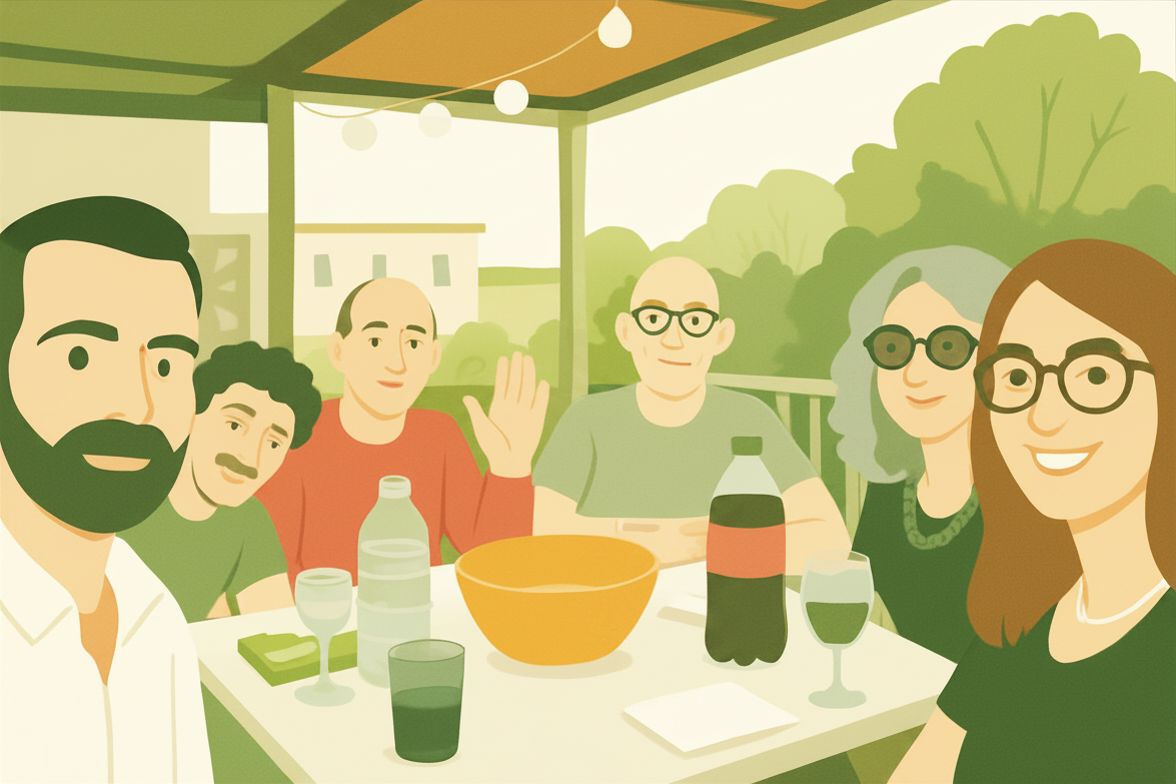
Later in the day, I joined a small aperitivo on a terrace with a group of former colleagues from the Kijiji team I used to be part of. If you have ever worked at a company that was truly formative, you know what these reunions feel like. A mix of warmth, nostalgia, sharp observations about the industry, a carefully curated amount of gossip, and the occasional moment where everyone in the group lands on the same insight at the same time.
That last part is what got me thinking. At some point during the evening, we started comparing notes on how we each use AI in our current work. Different industries, different roles, different tools, and yet strikingly similar patterns in behaviour, adoption, and the very human discomfort that comes with integrating these tools into a professional identity. (I am writing a separate piece on this exact topic )
The conversation was loose and unpretentious, the kind that can only happen when people are relaxed and trust each other. And yet it was one of the most professionally nourishing hours I have had in recent memory.
Your Network Is Not Just a Sales Funnel
There is a tendency in freelance advice culture to treat your network exclusively as a business development tool. Keep in touch so you get referrals. Show up at events so people remember your name when a contract comes up. Stay visible so clients come back.
All of that is true, and all of that matters. But reducing your network to a lead generation mechanism misses the bigger picture entirely.
Your network is also your industry intelligence. The people you stay in contact with are the ones who will tell you what is actually happening inside companies, what tools are being adopted, which sectors are moving, and which ones are contracting. No newsletter or industry report gives you the textured, opinionated, real-time view that a good conversation over a drink can provide. By the end of last night’s aperitivo, I had a sharper read on the current state of the Italian tech market than I would have gotten from a week of reading articles.
Your network is also your mental health infrastructure. This sounds dramatic, but bear with me. When you are a freelancer, especially a remote one, there is no colleague to catch you at the coffee machine and ask how you are doing. There is no ambient social texture to the workday. You have to build that deliberately, and the people in your network are the ones who provide it. A casual check-in call, an impromptu aperitivo, a voice note from someone who saw something that reminded them of you: these small acts of connection are what keep the wheels turning when the work itself gets hard.
And then yes, of course, your network is also where your next client might come from. But that tends to happen more organically, and more pleasantly, when the relationship was never purely transactional to begin with.
So Make It a Priority
I am not telling you to become a networking machine who turns every social interaction into a business opportunity. That is exhausting and, frankly, quite tedious for everyone else involved.
What I am saying is this: make time for people. Go to the industry events, even the ones that feel optional. Say yes to the coffee catch-up that has no obvious agenda. Send the message to the person you have been meaning to check in with for three months. Join the terrace aperitivo.
Do this not because it will necessarily result in a new project (though it might), but because staying connected to a professional community keeps you oriented. It keeps you curious. It keeps you sane. When you are a freelancer, isolation is an occupational hazard, and connection is its only real countermeasure.
The freelance life asks a lot of you. Give yourself the gift of not going through it alone.
A Thank You That Is Very Much Earned
Yesterday would not have been what it was without the people who showed up for it. To Barbara, thank you for the phone call, the honesty, and the practical wisdom you shared so generously. You reminded me that the hard patches are navigable, and that talking about them out loud is half the work. To Marco, Gianni, Roberto, Francesco, and Katia: thank you for the terrace aperitif, the conversation, the laughs, and the reminder that some professional friendships age like very good wine. You are all doing remarkable things, and I am lucky to still be in orbit with you.
Related Reading and Sources
These pieces and studies helped shape some of the thinking in this post, and are worth your time if you want to go deeper:
- Loneliness Is a Growing Workplace Crisis — Harvard Business Review on how workplace isolation affects performance, creativity, and wellbeing, with implications for remote and independent workers.
- Buffer’s State of Remote Work — Buffer’s annual report consistently identifies loneliness as one of the top challenges for remote workers. A useful data-backed anchor for the emotional realities of working from home.
- The Hidden Value of Weak Ties — A landmark study published in Science showing that acquaintances and loose professional connections (not just close friends) are disproportionately valuable for career opportunity and information flow. Exactly why that aperitivo matters.
- Freelancing in Europe 2023 — Malt x BCG Report — A comprehensive look at the state of freelancing in Europe, including data on challenges, income patterns, and the growing preference for hybrid working models.
- The Loneliness of the Long-Distance Freelancer — The Guardian’s work section has covered the psychological toll of solo working extensively. Worth browsing for personal accounts that mirror the experience described here.
