
When Covering Up a Logo Becomes the Ad of the Year
What Gillette, Levi’s, Heinz, and Beats can teach us from the 2026 World Cup
At the 2026 World Cup, the most talked-about marketing move wasn’t made by an official sponsor. It was handed out, unintentionally, by FIFA itself — a rule designed to protect its partners ended up giving free advertising to brands that weren’t partners at all.
The rule: “clean” stadiums
For the tournament in the United States, Mexico, and Canada, FIFA required all 16 host stadiums to remove or cover any non-official branding, so that tournament partners (including Adidas, Coca-Cola, Visa, and Qatar Airways) remained the only visible brands. Venues were even renamed for the duration of the competition: Gillette Stadium in Foxborough became “Boston Stadium,” Levi’s Stadium in Santa Clara became “San Francisco Bay Area Stadium,” and so on in every host city. At Gillette Stadium, nearly 65,000 strips of tape were applied to cover the logo printed on every single seat.
The measure is standard practice for protecting major sporting events against so-called ambush marketing — a brand associating itself with an event without paying for the rights to do so. An official sponsorship slot for the 2026 World Cup can cost anywhere between $35 million and over $200 million, a figure that makes it almost inevitable for non-paying brands to look for ways to grab some visibility anyway.
The cases: from shaving foam to censored ketchup
Levi’s: the tarp that hides nothing
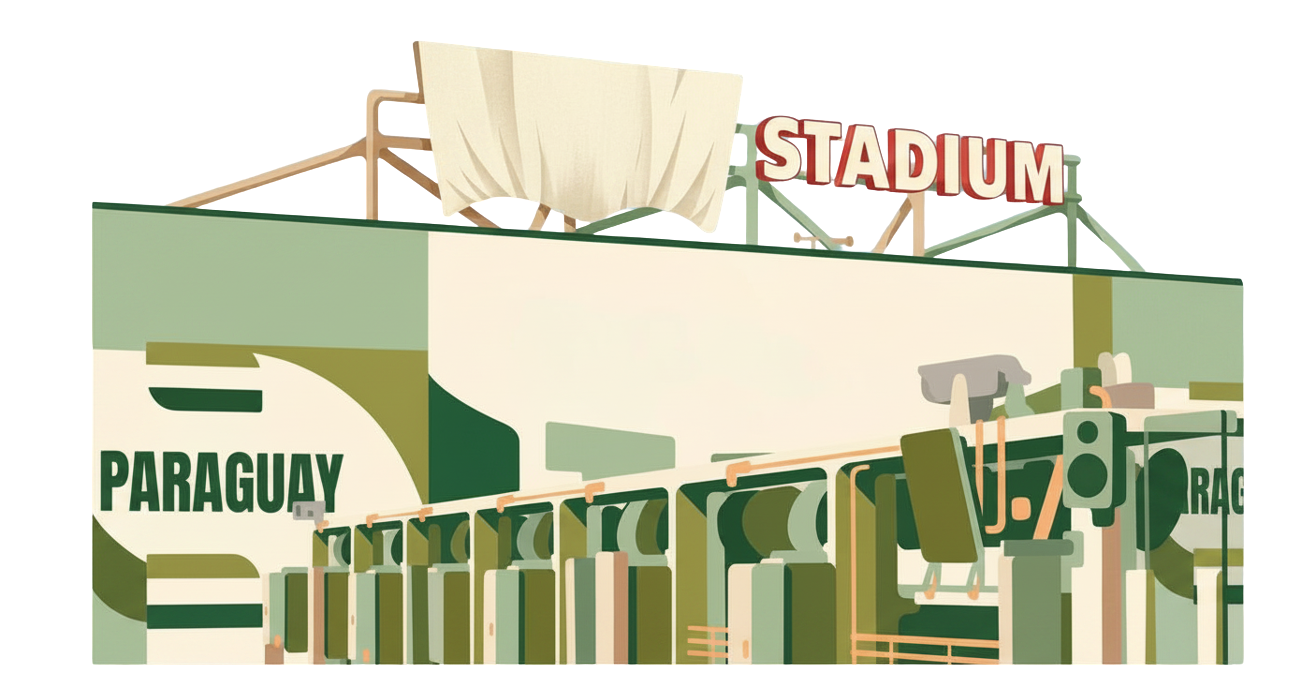
It all started with Levi’s. To cover the iconic flag-shaped logo on the stadium facade, the brand threw a white tarp over the sign. The problem is that the silhouette remains perfectly recognizable even under the fabric — a textbook case of “weaponized compliance,” following the rule to the letter while turning it into an advertising weapon. Levi’s rode the wave, changing its social media profile pictures to the “blacked-out” logo and posting a video captioned “Welcoming the world to the beautiful [redacted] stadium!” One X user summed up the effect well: “When a logo is the real deal, no tarp can erase it, because it no longer lives on the stadium wall but in people’s heads.”
Gillette: the (maybe) photoshopped shaving foam
Gillette Stadium responded with a social media image of its logo covered in what appears to be shaving foam, captioned: “At least we got to choose how we cover it.” The idea works because it’s consistent with the brand’s product, but photos taken on the ground show a much plainer covering, fueling suspicion that the “foam” image was AI-generated. One Redditor pointed it out bluntly: “This looks AI-generated, and Levi’s Stadium already did this.”
Heinz: the “unofficial” ketchup
At FIFA venues, even the ketchup bottles in press boxes were taped over in black because Heinz isn’t a tournament sponsor. The brand hit back with a limited-edition “Unofficial Stadium Ketchup,” with the name blacked out on the label and its long-running tagline “It Has to Be Heinz” adapted to “It still has to be…”. Instagram comments were enthusiastic: “Are they seriously releasing this? I want one! This is so smart.”
Beats: from the pitch to a product teaser
Players got caught up in it too: Jamal Musiala was asked to cover the Beats by Dre logo on his headphones with tape before a Germany match. Beats turned the moment into a teaser for a new headphone model, showing how even a restriction imposed live on the pitch can become launch content.
Why it worked: the Streisand effect applied to marketing
The mechanism behind these cases is known in communications as the Streisand effect: trying to hide something draws more attention than it would have if it stayed visible. Covering a recognizable logo doesn’t erase it — it turns it into a puzzle the public wants to solve, and share. According to the BBC, the “blacked-out” brands generated more online conversation than the brands that paid tens of millions of dollars to be official tournament sponsors. A TikTok video featuring Levi’s tarp surpassed 9 million views, and the brand went on to roll out the covered-logo design to stores in seven countries.
The economics are as simple as they are brutal: ad space that would elsewhere cost tens or hundreds of millions of dollars arrived here for free, courtesy of the organizer’s own rules.
The other side of the coin
The same dynamic that made the first move brilliant turned every subsequent move into a risk. Once a second, third, and fourth brand copied the covered-logo idea, the initial enthusiasm gave way to a certain fatigue: “cute, but Levi’s already won this game,” one Instagram user wrote about Gillette. Creative Bloq dubbed the phenomenon “corporate cringe” — the point at which a company beats a social media joke to death. The suspicion of an AI-generated image in Gillette’s case added a further loss of credibility, a reminder of how thin the line is between an original idea and its tired imitation.
The lesson, in that sense, cuts both ways: being first in an unexpected cultural moment can be worth more than a campaign planned months, but copying someone else’s move — especially without the same level of originality — lands with far less impact.
The takeaway
The 2026 World Cup case confirms a few rules that communications professionals already know, but rarely see illustrated this clearly: audiences reward reactiveness and self-deprecating humor more than ad spend; a constraint imposed from the outside, handled cleverly, can become a creative asset; the authenticity of the first move matters more than how often it’s repeated; and in a media environment where everything gets photographed and fact-checked, even the smallest detail — like shaving foam that might not be real — can flip how a campaign is perceived. In the social media age, sometimes the most effective way to get a brand noticed is to try to hide it.
Related resources
- Gillette turns FIFA branding ban into a marketing win – Content Grip
- Gillette, Levi’s, and Heinz: the FIFA cover-up is the campaign – More About Advertising
- Why FIFA Is Covering Logos and Sponsors at World Cup 2026 Venues – NSS Sports
- FIFA Clumsily Tried to Hide the Logos of These Banned Brands at the World Cup – Entrepreneur
- Heinz pokes fun at FIFA’s ‘clean stadium’ World Cup policy – Yahoo Sports
- Heinz blacks out its logo in World Cup stunt – Creative Bloq
- The World Cup forced this brand to hide its logo – then it backfired – Creative Bloq
- The viral World Cup logo-covering joke is already getting old – Creative Bloq
- FIFA wants Jamal Musiala to forget about Dre (during the World Cup) – Engadget
- Ambush Marketing: A Marketer’s 2026 World Cup Playbook – Criterion Global
- Playing by the rules: ambush marketing and legal risk at the FIFA World Cup 2026 – Burges Salmon
