
Ecco la versione inglese, con i link ai tuoi articoli aggiornati alle rispettive pagine in inglese:
Buy now, pay later: the new criterion shaping how Italy chooses what to buy
Every time I reach checkout on an e-commerce site, I do pretty much the same thing when I see the payment options: I skip installments entirely and pay everything in one go. My tolerance for debt is very low, and the idea of splitting a purchase, even interest-free, feels more unsettling than reassuring. Looking at the data, though, I realize I’ve become something of an outlier: according to Scalapay’s State of Shopping 2026, over 65% of Italian consumers now rank installment payment as their top purchasing criterion, ahead of price, promotions, and brand loyalty. It’s a figure worth sitting with, even for someone like me who stays on the margins of this trend, because it points to a shift that goes well beyond a simple payment fad.
Checkout has become a decisive moment
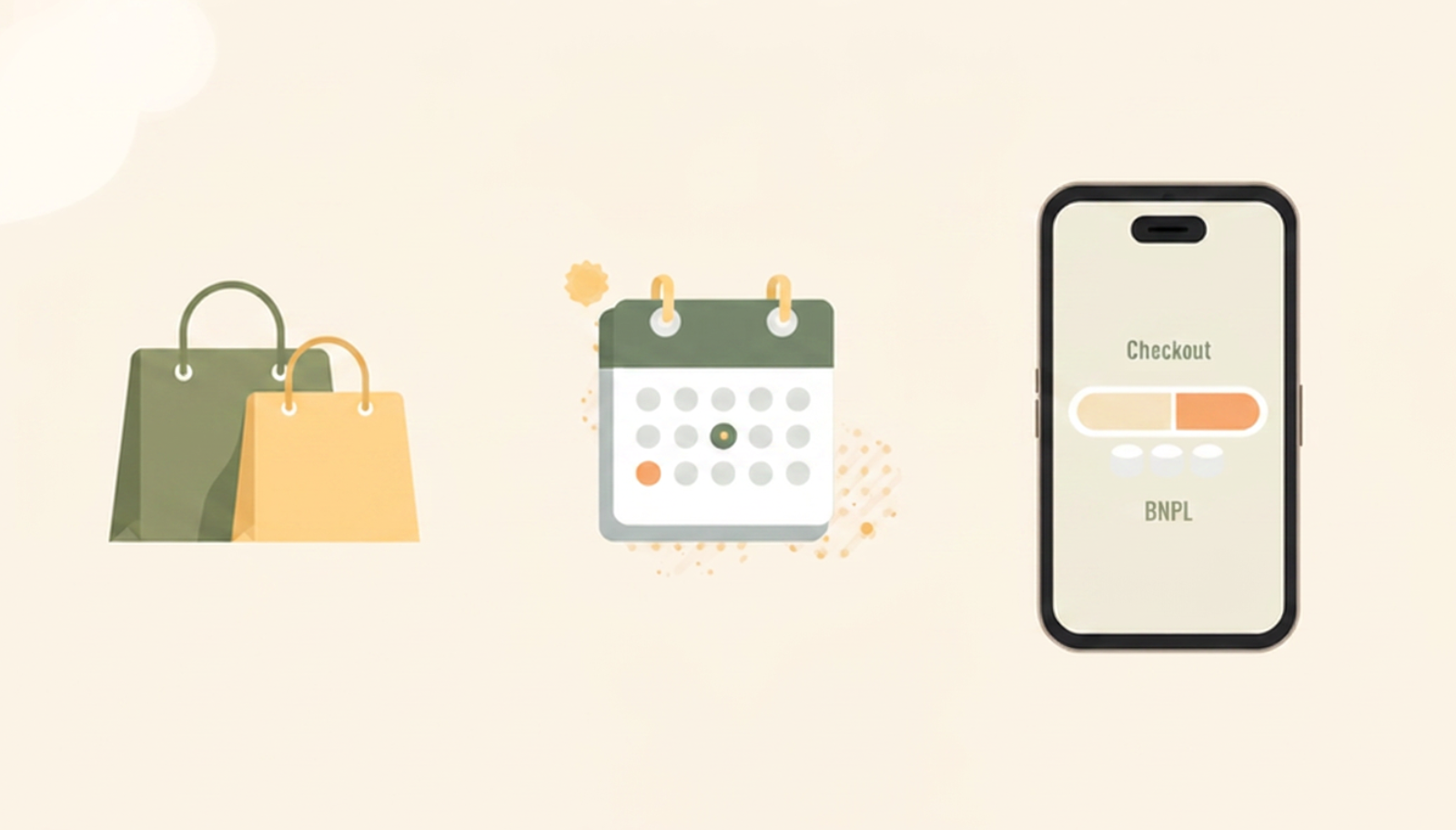
For years, we thought of the payment method as the last step in a purchase journey that had already been decided: pick the product, add it to the cart, pay, done. The data now tells a different story. When installment options are missing at checkout, 45% of users abandon their cart, and another 39% postpone their purchase. In practice, for nearly one in two consumers, the availability of Buy now, pay later isn’t a technical detail but a condition for completing the transaction at all.
This means installment payments have stopped being a nice-to-have feature and have started shaping decisions from the very beginning of the purchase journey. Anyone designing digital experiences, and here I’m speaking as a content designer too, should treat checkout as a moment of trust just as much as the product page or customer service. I touched on this when reflecting on my own path from Content Strategist to Content Designer at PayPal: every micro-moment in the payment flow carries emotional weight that needs to be written and designed with care.
From guilt to a sense of control
There’s a second data point I find just as interesting, and it concerns how people perceive these tools. Over 90% of users in Italy and Spain say they feel calmer or more in control when paying in three or four installments. It’s a cultural reversal from the narrative that has accompanied consumer credit for years, often framed as a risky shortcut to debt.
Bank of Italy rightly continues to flag that the ease of use of these services can increase the risk of over-indebtedness, and that warning shouldn’t be dismissed. But the way users actually experience it tells a different story: for many, splitting a payment into installments has become a tool for everyday budgeting rather than giving in to temptation. The language brands use to talk about these services has probably contributed to this shift in perception, moving the emphasis away from the word “debt” and toward management.
Who the main players are in Italy
Italy’s buy-now-pay-later market today features a handful of key players, each with a recognizable positioning.
PayPal remains the most familiar name, backed by a huge user base and a reputation built over more than two decades of online payments. Its “Pay in 3” option leans entirely on trust already earned: anyone who’s used PayPal for years to shop online finds it natural to trust it with installments too. The numbers confirm just how much this tool shapes purchasing behavior: in Italy, the average order value paid with “Pay in 3” is roughly 90% higher than orders paid with standard PayPal, and 51% of “Pay in 3” users surveyed abandoned a purchase when the option wasn’t available at checkout, a figure in line with Scalapay’s own findings. The service covers purchases between 20 and 3,000 euros, interest-free and with no setup fees, with the first installment charged immediately and the other two at 30 and 60 days. In recent months, PayPal has expanded its Italian offering with “Pay in 6, 12 or 24 installments,” a longer-term option aimed at higher amounts that, unlike the classic installment plan, comes with a variable APR: a clear line between the zero-cost BNPL we’re used to and genuine consumer credit.
Scalapay, founded in Milan in 2019, is today among the leading players in Southern Europe and has built a widespread presence not only online but also in Italian physical stores, through a QR code payment system at checkout counters. The report behind this article carries its name, and that’s no coincidence: few players know Italian consumer behavior as well as Scalapay does.
Klarna, a pioneer in the sector since 2005 in Sweden, stands out for an approach geared more toward a broader financial ecosystem than toward simple installment payments. Beyond classic installments, it offers banking tools, loyalty programs, and an AI-based system for calculating personalized spending limits, rather than applying a fixed cap to every user.
Satispay, finally, is the newest big name in Italian BNPL. Born as a mobile payment app built for everyday micro-transactions, with over 4 million active users, mostly aged 18 to 35, it has since expanded its offering to include installment payments. Its strength remains familiarity: for many younger Italians, Satispay is already the natural way to pay for a coffee at the bar or groceries at the market.
Who pays in installments, and for what
The profile of users of these tools confirms a core audience within Italian e-commerce: half of BNPL users are between 25 and 44 years old, with an average order value of 119 euros, which climbs to 525 euros in travel. These are digital consumers used to comparing prices and channels, and increasingly drawn to tools that offer transparency and simplicity.
Spending categories also outline something broader than a simple financial trend. Fashion is undergoing what the report calls a creative reset, with jewelry growing at four times the rate of clothing. In beauty, demand for clinical skincare and premium fragrance is rising, while searches related to slow living have grown 250% since 2024. These are signs of a consumer seeking intentionality, not just convenience, and one who likely sees BNPL as a tool aligned with this broader desire for control over everyday life.
A market running faster than the rules
The overall numbers show just how fast this growth is moving. In Italy, the value of Buy Now Pay Later reached 9.9 billion euros in 2025, up 45% year over year, with an even sharper acceleration online, at 50%. At the same time, digital payments reached 518 billion euros, accounting for 45% of total spending, while cash fell to 38%.
Growth this rapid also raises legitimate questions. BNPL is, in effect, a form of credit, and repeated late payments can generate reports that affect future mortgage or loan applications. The new European regulations introduced in 2026 are specifically designed to offer consumers greater transparency and protection, a topic worth keeping an eye on alongside the enthusiasm with which the market is embracing these tools. I wrote about this too in relation to the new e-commerce return rules, another area where European regulation is trying to keep pace with digital consumer habits.
What this scenario tells us
What I find most interesting about this data, looking at it as someone who writes and designs digital experiences, is the shift in the moment where trust gets built. For years, trust was built on the product page, on reviews, on the brand. Today, it’s also, perhaps mostly, built on how a service lets you manage your spending. Payment is no longer the final formality of a purchase already decided, but part of the decision itself.
For anyone working in content design or product strategy, this translates into something very concrete: the language and transparency used to communicate a payment option carry as much weight as the product’s user experience itself. It’s no longer a detail to be relegated to the last screen of checkout, and brands like PayPal gain a real competitive advantage because of it. It’ll be worth watching how the sector develops from here.
Related sources
- E-commerce: for 2 in 3 Italians, installment payment drives purchase decisions, La Repubblica (in Italian)
- Web 3.0, crypto and payments, Content Benefit
- Content Designer vs Strategist, Content Benefit
- eCommerce and returns: the news, Content Benefit
- Klarna vs Scalapay vs PayPal: which BNPL app to choose? Facile.it (in Italian)
